Saturday, 28 February 2026
That's Business: Repair Week 2026: Why Fixing Things Is Big Busines...
That's Business: Repair Week 2026: Why Fixing Things Is Big Busines...: Repair Week 2026 is more than a feel-good environmental campaign. For UK entrepreneurs, sole traders and high street independents, it repre...

Friday, 27 February 2026
Loch Lomond Banks Refusal of Planning Application. Charity Speaks Out
"Erection And Operation Of A Mixed-Use Tourism And Leisure Development Including Refurbished Tourist Information Building; Up To 60-Bedroom Apartment Hotel; Up To 32-Bedspace Budget Hotel, Up To 104 No. Self-Catering Holiday Lodges; Restoration And Redevelopment/Conversion Of Woodbank House And Attendant Listed Structures For Up To 21 Self-Catering Holiday Apartments (Subject To Other Necessary Consents); Leisure Pool, Waterpark, Spa; Restaurants, Hot Food Cafe And Retail Areas; Craft Brewery Inc
"As a long-established independent conservation charity which works in and around the LL&T national Park, we have consistently supported this planning application because it has always been clear to us that with its minimal frontage on the loch, the site’s previous planning history of being zoned for leisure and recreation and its situation within an existing envelope of development, it would have zero negative impact on the special qualities of Loch Lomond and its wider surrounding area.
"On the contrary, it would help to absorb the visitor pressures which already exist elsewhere and has the capacity to deliver many conservation and economic benefits to the area.
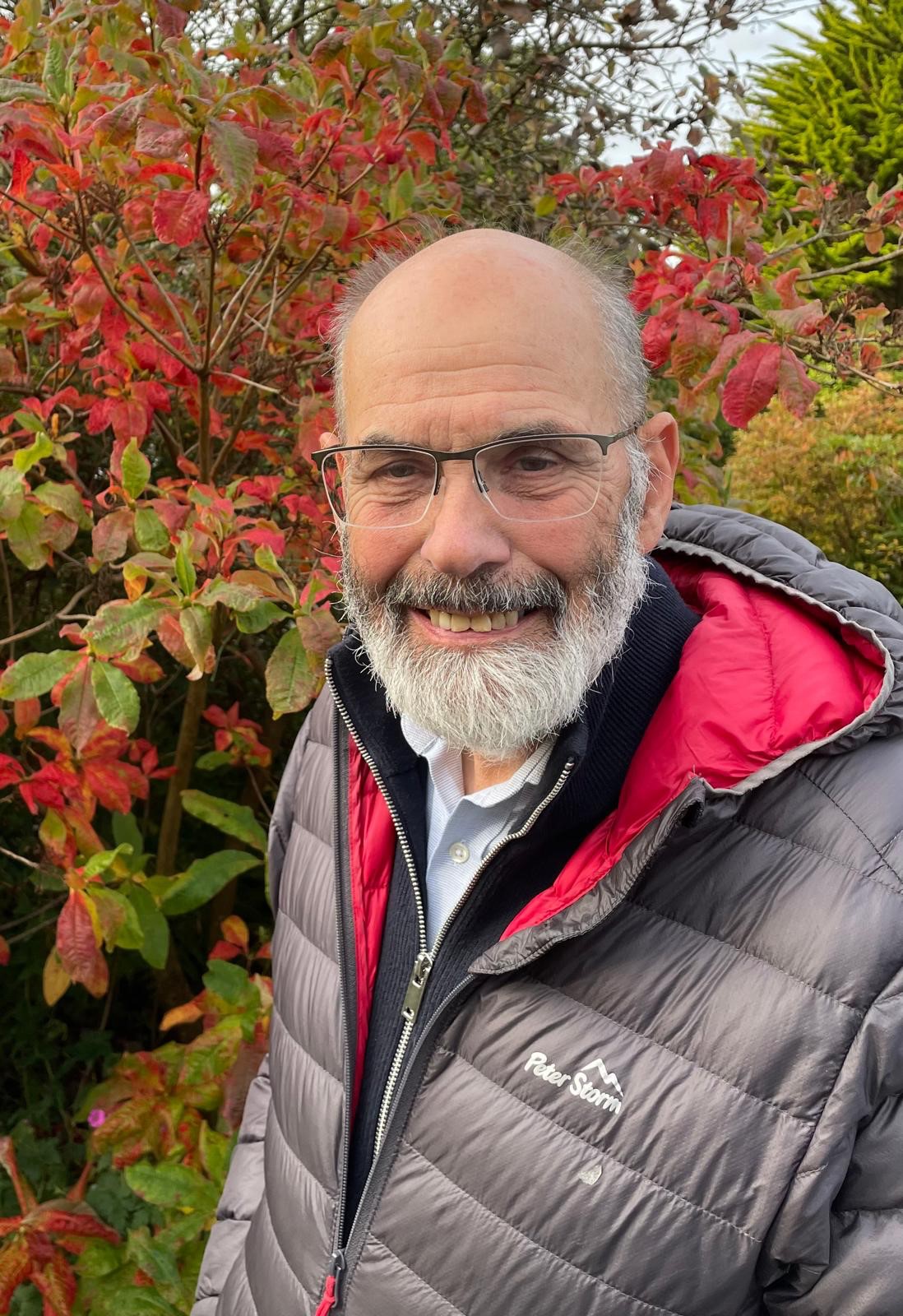
Their Chairman, John Urquhart (PICTURED) told That's Green: “We are disappointed, but not much surprised by Mr McKee’s decision to refuse the Lomond Banks planning application -conveniently before the Holyrood elections in May, in what we suspect is a politically motivated gambit which stands against good sense and all the planning evidence.
“The Green Party has very successfully turned this planning application into a political football, with “Saving Loch Lomond’ never being much about the merits of the planning facts, but much more about whipping up a sensational vote catching narrative.
"However, Mr Greer’s trumpeting of success may be premature as the ancient woodland and flooding grounds for refusal cited by Mr McKee are weak and will not stand up to legal analysis should the developer decide to follow the court option which is now open to them.
"There is almost no ancient woodland on the site, most of it having been cleared well before the 19th Century. A remaining agricultural shelter belt was mostly removed during the mid-20th Century by sand and gravel excavation.
"Ironically, what has saved the fragmentary narrow strip that now remains is the INEOS Finnart-Grangemouth oil pipelines which cross the site. The woodland whicTheh has colonised the former caravan site, rail yards and sand pits is recent.
"It is nonetheless one of the site’s primary assets which the developer wants to retain with compensatory planting nearby or onsite to make up for any trees lost agreed at the detail stage, because, after all, the application was always only an outline proposal. The same goes for the flooding issue.
"Most of the site is above maximum flood levels and mitigation measures for anything built lower down could readily have been developed at the detail stage.
"It is a great pity there has been so little exploration of the many economic, heritage and habitat benefits which could and should flow from such a proposal. The National Park’s planners have seemed largely blind to that, and the scheme’s huge potential has never been properly examined. Instead, many people have swallowed the populist “Save Loch Lomond” bait, including it seems, the National Park’s Board.
"In an effort to insert some balance, we outline here some examples of the kind of “planning gain” which would have been (and may yet be) available if only there was some leadership, ambition, imagination and, dare we say it, partnership.
They include:
Considerable local economic benefit including many good quality jobs during construction and then long-term operation of the business. Increased footfall would also benefit struggling Lomond Shores, Balloch and Alexandria retail and eatery businesses. Conservation of Woodbank House’s 18th century façade. Improved woodland management.
"Promotion of Red Squirrel population versus Grey. Rewilding of Stoneymollan Burn. Support for conservation efforts around Paddle Steamer Maid of The Loch and its heritage slipway, steam winch and Balloch Pier. Conservation of Old Balloch Station. Existing woodland walks lit and maintained. Re-established public transport link between Balloch and Balloch Pier. Strengthening of woodland wildlife corridors around southern end of Loch Lomond.
"Former (now disused) Gateway Centre repurposed to provide wet weather/indoor sports facilities for Lomond Banks residents (and the public). Facilitated by a bridge or ferry connection to Lomond Shores at Balloch Pier, repurposing of disused Balloch Castle as a café, shop, interpretation and visitor information centre. Assistance with efforts to improve peak time traffic flows at local A82 pinch points. Substantial tourism levy income to the local authority.
"It is highly unlikely any of these developments will ever occur without this kind of development”
For more information on rewilding the Stoneymollan Burn, see page 13 of the latest edition of their magazine, “Voice”, available online at https://www.lochlomondtrossachs.org.uk/voice-magazine
That's Business: CIBSE NABERS UK Energy for office ratings recognis...
That's Business: CIBSE NABERS UK Energy for office ratings recognis...: CIBSE Certification is delighted to announce NABERS UK Energy for Office ratings, certified by CIBSE and administered through its wholly ow...
World Water Day: Why Every Drop Matters

World Water Day, coordinated by United Nations, shines a spotlight on the global water crisis and the urgent need for sustainable management of freshwater resources.
It is easy, particularly here in the UK where turning on the tap feels effortless, to forget that billions of people around the world still lack reliable access to safe drinking water.
Yet even closer to home, issues such as ageing infrastructure, river pollution, drought risk and rising demand remind us that water security is not guaranteed.
Why World Water Day Matters
Water underpins everything:
Public health
Food production
Energy generation
Wildlife habitats
Local economies
Without clean water, communities cannot thrive. Globally, water scarcity is increasing due to climate change, population growth and pollution.
Periods of extreme rainfall followed by prolonged dry spells are becoming more common, placing pressure on reservoirs, farmland and wildlife alike.
In England, hosepipe bans in recent summers have demonstrated that even a temperate climate is not immune to shortages. Meanwhile, concerns about river quality have prompted widespread discussion about sewage discharge and environmental regulation. These are not distant problems — they are part of our national conversation.
The Link Between Climate and Water
Climate change is, at heart, a water story. Rising temperatures intensify the water cycle, meaning heavier storms, more flooding, longer droughts and disrupted seasonal rainfall patterns.
This affects:
Farmers managing crops
Households facing higher bills
Wildlife depending on stable ecosystems
Coastal communities vulnerable to rising seas
World Water Day encourages governments, businesses and individuals to think long-term about resilience, infrastructure and responsible consumption.
What Can We Do at Home?
While global policy matters, everyday habits make a difference too. Consider:
1. Use water wisely
Shorter showers, fixing leaks promptly and running full washing loads all reduce waste.
2. Choose reusable options
A refillable bottle and filtered tap water cut down on plastic and support trust in local supplies.
3. Be mindful of what goes down the drain
Avoid pouring fats, oils and chemicals into sinks. These damage waterways and treatment systems.
4. Support river conservation
Many local volunteer groups help protect streams and canals. Even a few hours a year can have impact.
Water and Community
Water has always brought people together, from village wells to canal networks and seaside towns. It shapes our landscapes and our memories. Whether it is a walk along a Welsh coastline, a Shropshire riverbank or a city canal path, water connects us to place.
World Water Day is not simply about statistics. It is about recognising that access to clean water is a human right and a shared responsibility.
A Moment of Reflection
The next time you fill the kettle or water the garden, pause for a moment. Consider the journey that water has taken, from cloud to reservoir, through pipes and treatment plants, and finally into your home.
Every drop has value.
And protecting it is something we can all be part of.
International Day of Forests: Why the World’s Woodlands Matter More Than Ever

From the ancient woodlands of Britain to the vast canopy of the Amazon, forests quietly shape our climate, economy and wellbeing.
Yet they are under constant pressure from deforestation, disease, pollution and climate change. This day offers a moment to pause and reflect on what forests give us and what we must do to protect them.
Why Forests Matter
Forests cover around a third of the planet’s land surface. They:
Absorb carbon dioxide and help regulate the global climate
Support 80% of terrestrial biodiversity
Protect soil and water systems
Provide livelihoods for millions of people
Offer spaces for recreation and mental restoration
In the UK, woodlands are central to our cultural and natural heritage. Think of the legendary Sherwood Forest, or the patchwork of ancient woodlands scattered across Shropshire, Wales and beyond. These places are not just tourist attractions, they are carbon stores, wildlife habitats and natural sanctuaries.
Forests and Climate Change
Forests act as the lungs of the planet. Through photosynthesis, trees absorb carbon dioxide and release oxygen, helping to slow the pace of global warming. When forests are cleared or burned, that stored carbon is released back into the atmosphere.
The Amazon Rainforest alone plays a crucial role in global climate systems. Large-scale deforestation there has consequences far beyond South America, affecting rainfall patterns and biodiversity worldwide.
Closer to home, tree planting initiatives across the UK aim to increase woodland cover and restore degraded landscapes. However, planting new trees must go hand in hand with protecting existing ancient forests, which are irreplaceable ecosystems developed over centuries.
The Mental Health Connection
Spending time in forests has measurable benefits for mental health. A quiet woodland walk can lower stress levels, reduce blood pressure and improve mood. The Japanese practice of “forest bathing” immersing oneself mindfully in a wooded setting, has inspired similar wellbeing initiatives across Europe.
For many people, local forests became essential spaces during lockdown periods, offering fresh air, exercise and perspective.
Threats Facing Forests
Despite their value, forests face serious challenges:
Illegal logging
Agricultural expansion
Urban development
Wildfires
Invasive pests and diseases
In the UK, ash dieback disease has devastated thousands of trees, reshaping familiar landscapes and reminding us how fragile woodland ecosystems can be.
How You Can Mark the Day
International Day of Forests is not only about awareness, it is about action. You could:
Visit a local woodland and learn about native species
Support conservation charities
Reduce paper and wood waste
Choose sustainably sourced timber and products
Plant native trees in your garden or community
Even small changes in consumer habits can reduce pressure on global forest systems.
A Future Rooted in Responsibility
Forests connect climate, biodiversity, culture and wellbeing in one living network. They are ancient yet vulnerable; resilient yet dependent on human stewardship.
International Day of Forests invites us to look beyond the trees, and recognise that protecting forests means protecting ourselves.
Whether it is a walk beneath towering oaks, a commitment to sustainable choices, or supporting conservation efforts, the future of forests begins with everyday decisions.
Because when forests thrive, so do we.
https://forests.desa.un.org/events/international-day-forests-2026
World Wildlife Day: Celebrating the Natural World We All Share

Established by the United Nations in 2013, the day celebrates the world’s wild animals and plants while raising awareness of the urgent need to protect them.
From towering elephants roaming African plains to tiny pollinators working quietly in British gardens, wildlife shapes ecosystems, cultures, and economies across the globe. Without it, our world would be unrecognisable.
Why World Wildlife Day Matters
Wildlife is not simply something we admire on documentaries. It underpins food security, clean air, fresh water and even medicine. Yet biodiversity loss is accelerating due to habitat destruction, climate change, pollution and illegal trade.
Organisations such as WWF and The Wildlife Trusts warn that many species are declining at alarming rates. In the UK alone, hedgehogs, water voles and numerous bird species have seen sharp population drops over recent decades.
World Wildlife Day encourages governments, businesses and individuals to take meaningful action, not just admire wildlife, but actively protect it.
The Global Theme
Each year, the day adopts a theme highlighting a particular aspect of conservation,from marine ecosystems to forest restoration, youth engagement or wildlife crime prevention. These themes reinforce the idea that protecting wildlife requires cooperation across borders and sectors.
After all, wildlife does not recognise political boundaries. Migratory birds, ocean mammals and pollinating insects move freely — and depend on healthy habitats wherever they land.
How We Can Make a Difference in the UK
You don’t need to trek through the Amazon to support wildlife conservation. Action at home matters.
1. Support Local Conservation
Visit nature reserves managed by groups like RSPB or your local Wildlife Trust. Membership fees directly fund habitat protection.
2. Create Wildlife-Friendly Gardens
Plant native species, leave a patch of lawn unmown, or install a small pond. Even urban balconies can become mini sanctuaries for bees and butterflies.
3. Reduce Plastic and Waste
Marine wildlife, including species studied and protected by organisations such as Marine Conservation Society, are heavily impacted by plastic pollution. Reducing single-use plastics makes a real difference.
4. Choose Ethical Products
Look for sustainably sourced timber, palm oil and seafood. Consumer choices influence global supply chains.
Wildlife and Wellbeing
Spending time in nature benefits mental health and overall wellbeing, something increasingly recognised in modern Britain. A quiet walk in a woodland, a glimpse of deer at dusk, or even the sight of garden birds feeding can restore a sense of perspective.
Wildlife enriches not only ecosystems but our everyday lives.
A Shared Responsibility
World Wildlife Day is not just about saving distant species. It is about safeguarding the intricate web of life that supports us all.
Whether it’s protecting a rainforest thousands of miles away or helping hedgehogs cross your local road safely, every small action contributes to a larger movement.
The natural world is extraordinary. World Wildlife Day invites us to celebrate it, and more importantly, to protect it for generations to come.
Thursday, 26 February 2026
International Polar Bear Day: Why Arctic Conservation Matters More Than Ever

Every year on 27 February, International Polar Bear Day shines a spotlight on one of the planet’s most recognisable, and increasingly vulnerable, animals: the polar bear.
Organised by conservation groups including Polar Bears International, the day is designed to raise awareness about the challenges these Arctic giants face in a warming world.
For a sustainability-focused platform like That’s Green, it’s a moment to pause and consider not just the fate of one species, but what polar bears represent in the broader climate conversation.
Why Polar Bears Are Under Threat
Polar bears (Ursus maritimus) are uniquely adapted to life on sea ice. They rely on it as a platform to hunt seals, rest, and in some cases travel vast distances. The problem? Sea ice is shrinking.
According to climate scientists, Arctic sea ice has declined dramatically over the past few decades due to rising global temperatures. This directly affects polar bears’ ability to feed, leading to longer fasting periods, lower body weights, and reduced cub survival rates.
The species is currently listed as vulnerable on the global conservation scale, with estimates suggesting around 20,000–25,000 individuals remain in the wild across the Arctic regions of Canada, Greenland, Norway, Russia and Alaska.
The Climate Connection
Polar bears have become a powerful symbol of climate change. While their image is often used in environmental campaigns, the science behind their vulnerability is starkly real.
When sea ice forms later in the year and melts earlier in spring, polar bears have less time to hunt. This means:
Fewer fat reserves to survive the summer
Lower reproductive success
Increased human-wildlife conflict as bears move closer to settlements in search of food
The Arctic is warming nearly four times faster than the global average. What happens there doesn’t stay there – melting ice affects global weather patterns, sea levels and ecosystems worldwide.
What International Polar Bear Day Encourages
International Polar Bear Day focuses on practical climate actions. Organisations such as World Wildlife Fund and Polar Bears International often promote:
Reducing home energy consumption
Switching to renewable electricity suppliers
Improving insulation and heating efficiency
Supporting climate-conscious policies
Educating others about Arctic conservation
The aim isn’t guilt, it’s momentum. Small actions, multiplied across communities, create measurable change.
How You Can Mark the Day
You don’t need to travel to the Arctic to make a difference. Here are meaningful ways to observe International Polar Bear Day:
Reduce Your Carbon Footprint
Review your household energy use. Could you switch to LED lighting, lower your thermostat slightly, or explore green tariffs?
Learn and Share
Read about Arctic ecosystems and share reliable information through your social media channels. Raising awareness matters.
Engage Young People
Polar bears capture children’s imaginations. Use the day to spark conversations about wildlife protection and sustainable living.
Support Conservation
Consider donating to reputable organisations working in Arctic research and habitat protection.
Why It Matters Beyond the Arctic
Polar bears are not just distant wildlife in a frozen landscape. They are indicators of planetary health. When their habitat disappears, it signals wider environmental instability.
For readers of That’s Green, International Polar Bear Day is a reminder that sustainability is interconnected. From energy choices in UK homes to global climate agreements, our decisions ripple outward.
Protecting polar bears ultimately means protecting ecosystems, coastal communities, and future generations.
And perhaps that’s the most powerful message of all.
Wednesday, 25 February 2026
That's Technology: PlanetWEST Unveils MIDAC G2: The “Second Act” for ...
That's Technology: PlanetWEST Unveils MIDAC G2: The “Second Act” for ...: As Artificial Intelligence rapidly scales, its insatiable demand for electricity is claiming nearly all forecasted renewable energy capacit...
Tuesday, 24 February 2026
That's Business: Investing in low-carbon commodities can boost retu...
That's Business: Investing in low-carbon commodities can boost retu...: Investing in low-carbon metals and agricultural commodities can boost returns by up to 22%, according to new research from emlyon business...
Friday, 20 February 2026
New Global Alliance Promises to Advance Wild Animal Care Across South Africa

An inaugural Memorandum of Understanding (MoU) has officially been signed to drive up standards of wild animal care and education at progressive zoos, aquariums, and sanctuaries across South Africa.
By increasing access to high quality educational materials and professional development, the two organisations aim to up-skill frontline animal care professionals and managers in key areas of animal care and welfare.
By applying such learning, keepers have the opportunity to significantly help reduce captive-related stress, or better provide for an animal's need to promote their naturalistic behaviors for example.
Ultimately, these improvements move the needle from mere survival to truly good welfare, allowing animals to thrive in a safe, stimulating environment.
SAAKA was established in 2024 to create a formal network for animal care professionals in South Africa, providing a voice for those who understand the intricate needs of the animals in their care. This partnership with Wild Welfare, a global leader in animal welfare training, will bring important expertise and resources directly to the South African animal keeper community.
“Authentic long-term relationships lie at the foundation of our work,” Dave Morgan, Field Director for Wild Welfare told That's Green.
“This MoU is grounded in long-term, authentic relationships and a practical commitment to supporting staff on the ground, so that animals under human care are managed to thrive rather than simply persist.”
The formalised partnership hopes to increase the availability of advanced welfare training and learning opportunities for animal caregivers within SAKKA’s membership while establishing a platform for sharing resources, husbandry techniques, and progressive welfare research.
Robynn Ingle-Moller, Vice-President of SAAKA, highlighted the significance of the union, stating, “Keepers are the first responders in animal welfare.
"By banding together and partnering with an organisation like Wild Welfare, we are ensuring that the future of animal care in South Africa is grounded in compassion, science, and professional excellence.”
The MoU marks the beginning of a five-year journey dedicated to raising the bar for captive animal welfare and ensuring a brighter future for the thousands of wild animals housed across South Africa's managed facilities.
Clean energy needs a clean planet: PLAN-B NET ZERO and everwave launch joint initiative
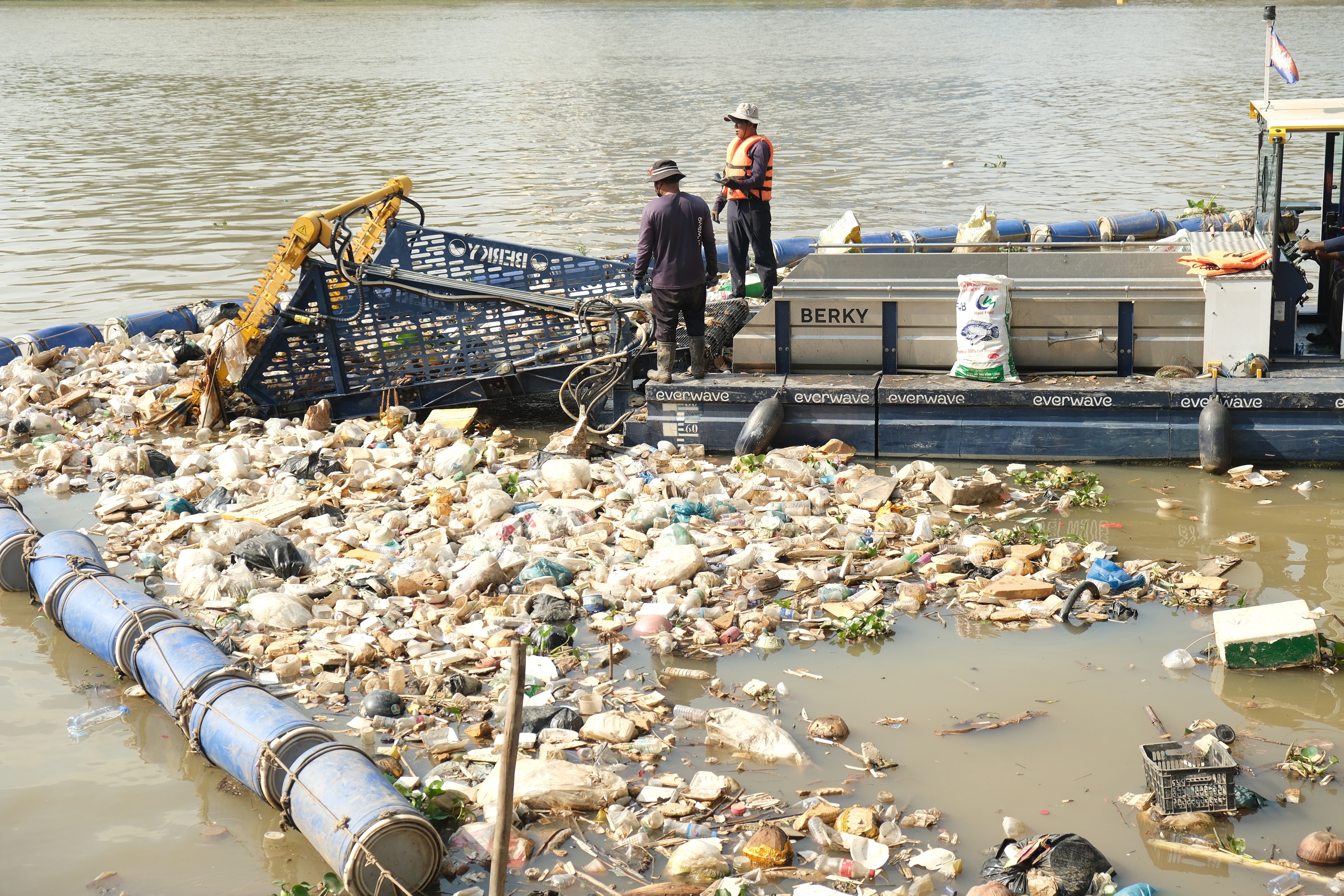
With the guiding principle ‘1 euro = 1 kilogram of waste’, the partners recovered 10,000 kilograms of waste from rivers in Cambodia at the start of the initiative.
Around 11 million tonnes of plastic waste enter the oceans every year.
Without effective countermeasures, this volume could almost triple by 2040. Studies show that about 80 percent of marine plastic reaches the sea via roughly 1,656 rivers worldwide. To date, everwave has removed in excess of a staggering 2.4 million kilograms of plastic from rivers in Cambodia, Albania, and Thailand.
The company uses specially-designed waste collection boats, barriers, and manual cleanups to stop plastic before it reaches the oceans.
At the same time, mobile sorting and recycling solutions return materials efficiently to the circular economy. AI support optimises collection routes to clean as many waterways as possible in a sustainable way.
The partnership began in Cambodia, where the initiative’s waste collection boats operate in rivers and canals around cities.
With this action, PLAN-B NET ZERO and everwave advance their shared vision of a clean and sustainable future.
“Together with everwave, we have already removed 10,000 kilograms of waste from rivers in Cambodia. We want to use our good energy in the best possible way, because clean energy alone does not help without a clean planet,” Julia Schnitger, Head of Marketing at PLAN-B NET ZERO, proudly told That's Green.
everwave carries out cleanups directly on site and works closely with local authorities and partners. This structure anchors the measures long term in the regions and creates measurable impact.
PLAN-B NET ZERO transforms 100% sustainable energy from a commodity into a lifestyle product.
Their platform expands energy supply with digital and service-based offerings, as well as software and licensing.
Data-driven optimisation, user-focused features, and additional services beyond pure energy supply create a new, integrated user experience.
You can learn more by visiting
and
Thursday, 19 February 2026
Clean Planet Group Announces Strategic Investment by FTAI Infrastructure to Support Waste-Plastic Advanced Recycling Expansion, and Sustainable Aviation Fuel (SAF) Infrastructure Deployment

This marks the next phase of a partnership focused on scaling advanced waste-plastics recycling and sustainable fuels infrastructure across Europe and North America.
The expanded investment builds on the previous collaboration between FTAI Infrastructure and Clean Planet Group in the US and reflects a growing ambition to advance Clean Planet’s technology, project pipeline and international market opportunity.
The strengthened partnership broadens FTAI Infrastructure’s support beyond individual US project development to the wider Clean Planet platform.
Clean Planet operates across three integrated divisions: Energy, which develops, builds and operates advanced recycling facilities; Technologies, which focuses on proprietary refining processes and low-carbon fuels innovations; and the Clean Planet Foundation, the not-for-profit arm supporting education, engagement and impact. Together, their platform addresses two structurally linked global challenges: unmanaged plastic waste and the decarbonisation of hard-to-abate sectors.
Clean Planet Technologies’ progress in plastics-to-SAF aligns closely with FTAI Infrastructure’s long-standing commitment to sustainability and energy-transition assets and reflects the growing importance of SAF as a scalable, near-term solution for reducing aviation emissions. Last month, Clean Planet Technologies received grant support through the UK Government’s Department for Transport’s SAF Clearing House.
Dr Andrew Odjo, CTO and Co-Founder of Clean Planet Group, told That's Green: “FTAI Infrastructure has been a committed and highly aligned partner, and this next phase of investment enables our ambition to scale internationally.
"Beyond our established advanced recycling business, we are building a technology-led platform that can supply lower-carbon fuels to sectors that urgently need them, which makes this a particularly exciting moment for the Clean Planet.”
The extended partnership will support the continued rollout of Clean Planet’s ecoPlant facilities, which produce circular feedstocks for downstream petrochemical manufacturers, further development of its clean fuels technology portfolio, and progression towards commercial-scale SAF production.
Monday, 16 February 2026
Energy-hungry AI and air conditioning risk wiping out climate gains made by renewables

Energy-hungry artificial intelligence data centres and greater use of air conditioning in a fast-heating world are among several factors threatening to undermine the climate gains made by renewables, according to the paper published in Nature Reviews Clean Technology.
Researchers from Sussex and Vienna’s Central European University found record growth in solar power in the first three quarters of 2025.
For the first time this rise in clean electricity outpaced global growth in electricity demand, yet the researchers warn this fragile balance is now starting to tip back the other way.
Since the 2015 Paris Agreement, which aims to limit global temperature rises, global wind and solar power generation has grown rapidly, yet emissions from the power sector have continued to rise as electricity demand has grown even faster. Analysis of global energy demand in 2025 found artificial-intelligence data centres as a major driver, alongside increased use of air conditioning as people struggle to cope with hotter temperatures.
Electrification of transport and consumer trends such as bigger cars were also highlighted as culprits. The report found these pressures are eroding efficiency gains made by individual countries. Projections to 2030 warn that increases in electricity use could consume most new renewable supply unless proactive measures are taken to limit demand.
“Renewables are scaling at record speed, but demand growth from data centres, cooling and transport is running just as fast,” Professor Felix Creutzig, Bennett Institute Chair at the University of Sussex told That's Green.
“We need policies that curb unnecessary energy use and shape demand so that clean electricity can have the intended effect of cutting emissions from fossil fuels.”
The report cites evidence from the European Union and major cities showing that demand reduction isn’t necessarily a matter of human hardship, and can coincide with economic growth and wellbeing for citizens through efficiency measures and urban planning that reduces dependence on cars. The authors conclude that aligning renewables with demand-side strategies is now central to meaningful decarbonisation.
The University of Sussex’s Bennett Institute for Innovation and Policy is hosting its annual Research Symposium on 19 February. Under the theme Zero Hour for Energy Policy: Researching the Race to Net Zero delegates will explore pressing issues that underpin the acceleration of climate change policies. Attendance is free, but registration is required.
Thursday, 12 February 2026
Tourists Urged to Boycott Exotic Animal Cafés as Welfare Charity Launches Public Pledge
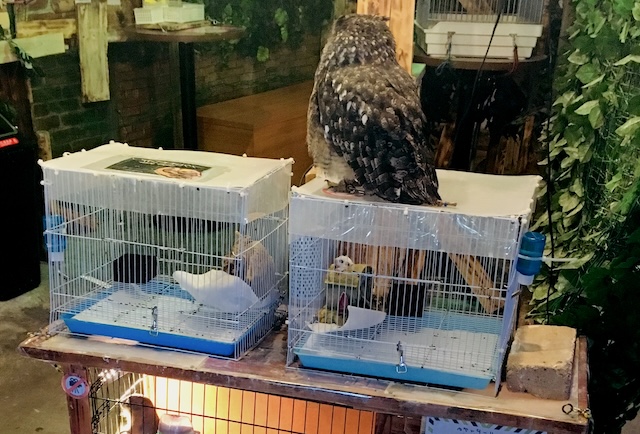
The ‘Just Say No’ pledge invites the public to look beyond the ‘cute’ aesthetics of these increasingly popular tourist spots, and to recognise the harsh and cruel realities lived by the animals kept within them.
The rise of animal cafés, particularly across Japan, has become increasingly visited experiences by tourists, likely driven, in part by their frequent social media exposure.
Guests are promised close-up encounters with exotic species such as owls, otters, capybaras and even fennec foxes, however, behind their “cute cafe” image, lies a stark reality of highly compromised animal welfare.
Wild Welfare, working alongside a network of Japanese animal welfare NGOs’ and experts, is sounding the alarm on the distress these commercial environments are causing animals along with their risk to visitor health and safety.
“People visit these cafés because they ‘love’ animals, but the tragic irony is that their decision to visit fuels a cycle of suffering,” Georgina Groves, a Senior Animal Welfare Advisor at Wild Welfare, told That's Green.
“Our research and technical paper, carried out through the support of the charity ‘Animal Welfare Japan’, demonstrates that these crowded, noisy environments are fundamentally incapable of meeting the complex needs of wild animals. From over handling, to the inability of species to perform any natural behaviours; thousands of animals in these cafes are existing in a state of chronic stress.”
The ‘Just Say No’ pledge is part of a broader strategy which has seen Wild Welfare working with partners to advocate for the end of exotic animal entertainment cafes. The organisation provides technical expertise to assist the transition of the international tourism industry toward more ethical, welfare-friendly practices.
By taking the pledge, supporters are making a tangible commitment to the welfare of captive wild animals and helping to shift the global demand away from the over commercialisation of wildlife.
Take a few seconds to stand up for animal welfare and add your name to the online pledge today at https://wildwelfare.org/animal-cafe-pledge
Sunday, 8 February 2026
That's Business: The Green Gloss: When “Eco-Friendly” Advertising I...
That's Business: The Green Gloss: When “Eco-Friendly” Advertising I...: Is this where vegan leather comes from? Walk into any high-street shop or scroll through online listings and you’ll see a familiar promise: ...
Saturday, 7 February 2026
That's Food and Drink: Cake it forward - International Animal Rescue Laun...
That's Food and Drink: Cake it forward - International Animal Rescue Laun...: International Animal Rescue launches fundraising campaign to help save endangered orangutans. International Animal Rescue is calling on anim...
Wednesday, 4 February 2026
H2? Oh! Daimler Buses teams up with FEV to launch the first hydrogen-powered Setra demonstrator vehicle
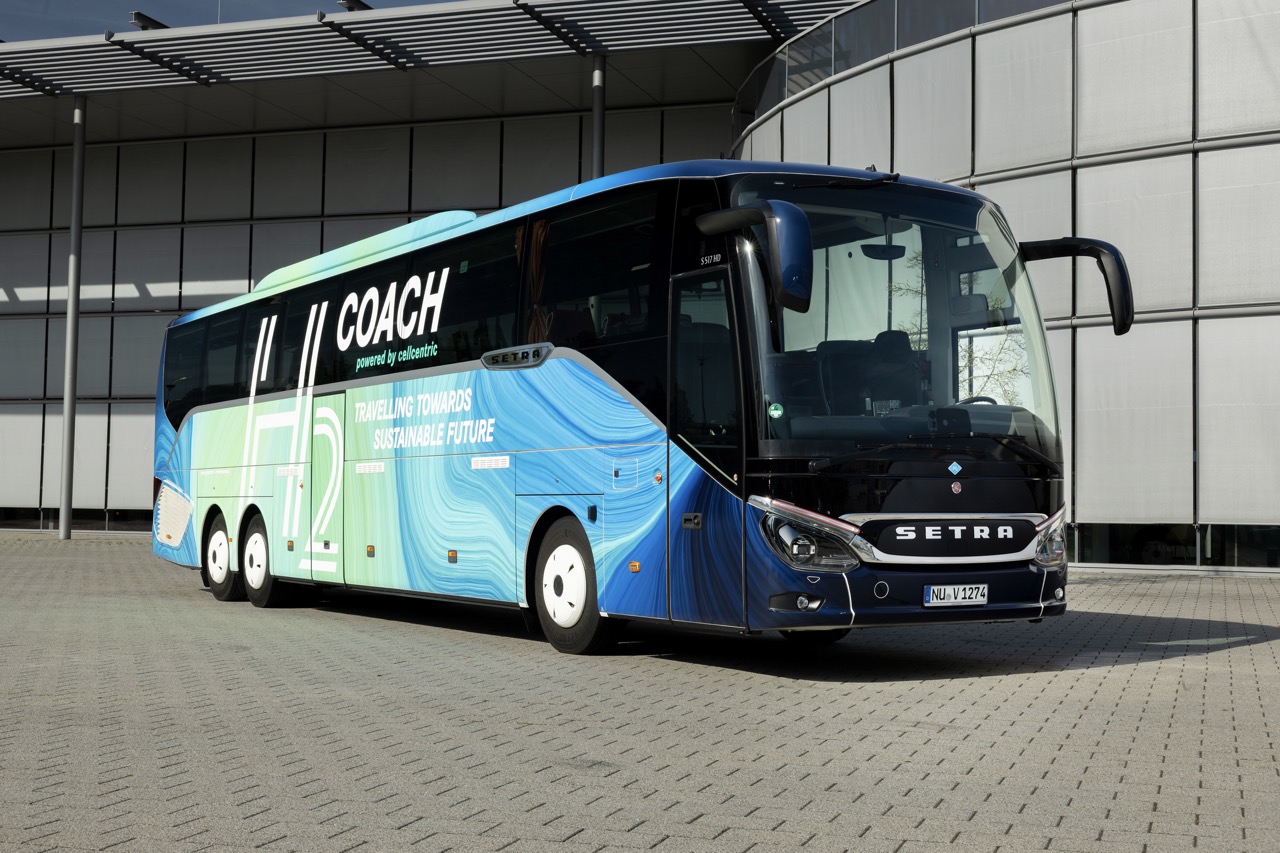
The starting point for the “H₂ Coach” technology demonstrator, intended for testing purposes, was a conventional Setra coach.
This marks an important step toward locally emission-free long-distance travel: short refueling times, ranges of at least 800 kilometers per tank filling, and quiet operation underscore its practicality.
Daimler Buses and FEV jointly undertook the complete system transformation from diesel drive to fuel cell electric vehicle. After creating the overall vehicle concept, FEV took over the mechanical and E/E integration.
One distinguishing feature is that the individual components deployed – including fuel cells, high-voltage components (such as batteries and electric motors), H₂ tank assemblies, control units including software – originate from different technology platforms from Daimler Buses and Daimler Truck. FEV integrated the systems into a functional powertrain in the overall vehicle.
An important factor in the development process was safety. Measures were developed for various crash load cases as well as for functional, high-voltage, and hydrogen safety.
“The 'H₂ Coach' impressively demonstrates how complex subsystems can be integrated into a testable, safe complete vehicle when vehicle, powertrain, and E/E expertise come from a single source,” Klaus Wolff, Vice President Project Management at FEV told That's Green.
“With our one-stop-shop approach, we quickly and efficiently delivered the desired customized solution to our customer – from concept to approval.”
After successful approval by German technical inspection authority TÜV and passing electromagnetic compatibility tests, FEV handed over the vehicle to Daimler Buses in the summer of 2025 after approximately two years of joint project work.
Tuesday, 3 February 2026
Heal Rewilding secures significant Garfield Weston Foundation grant to accelerate nature recovery and community wellbeing
 |
| Courtesy Heal Rewilding |
The funding will enable Heal to expand its impact across England, supporting the recovery of degraded landscapes while strengthening connections between people, wildlife and place.
Heal is taking direct action to tackle the climate and ecological crises by helping ecosystems to recover and wildlife populations to thrive.
Alongside ecological gains, the funding will also support Heal’s work with local communities, helping to improve people’s health and wellbeing through meaningful access to nature.
Central to the charity’s approach is enabling people to connect with the natural world – to learn, heal, share and inspire action locally, nationally and beyond.
The Garfield Weston Foundation is a family founded grant-maker supporting charities operating in a wide variety of sectors across the UK that make a positive difference within their communities.
Established by W. Garfield Weston in 1958 through an endowment of shares in the family business – now known as Associated British Foods plc – the Foundation continues to be guided by the Weston Family. The Trustees, each of whom are direct descendants of the founder, play an active, informed role in its work.
This successful model has ensured that our charitable donations have grown as the businesses have grown, enabling the Foundation to award grants totalling nearly £1.7 billion since its establishment. The most recent financial year 2024-2025 saw the Foundation give away almost £130 million to 2,967 charities.
The grant marks an important step in Heal Rewilding’s continued growth as the charity works towards its ambition of establishing more rewilding sites across England. Each Heal site is designed to provide a permanent haven for nature while also delivering tangible benefits for local communities, including job creation and inward investment. Heal’s second site will be in the north of England.
Commenting on the award, Sarah Winchester, Director of Heal Rewilding told That's Green: “This generous support from the Garfield Weston Foundation will enable us to build lasting momentum for nature recovery.
"We've already witnessed remarkable and heartening successes at our pilot site, Heal Somerset, both in terms of biodiversity and community engagement and this funding will help us to advance our mission further. We are incredibly grateful for the confidence and belief that the Foundation shows in Heal.”
Subscribe to:
Comments (Atom)