Showing posts with label rewilding. Show all posts

Wednesday, 8 July 2026

Rewilding our waters in an era of offshore wind: New report

For a country racing towards a cleaner energy future, offshore wind is often seen as one of Britain's greatest environmental success stories. 

But a new report from Rewilding Britain warns that if developments are not carefully planned, the UK could repeat many of the environmental and social mistakes of previous industrial revolutions.

As thousands of new offshore wind turbines are expected to be installed over the coming decades, the charity says nature recovery and coastal communities must be placed at the centre of every project rather than treated as an afterthought.

Its latest report, in an era of offshore wind, argues that marine rewilding should become a fundamental part of offshore wind planning. Instead of viewing renewable energy and conservation as competing priorities, the report suggests they can work together to restore marine habitats, strengthen local economies and improve biodiversity.

The charity highlights three key recommendations. First, marine rewilding should be integrated into offshore wind developments from the outset, helping regenerate ecosystems while supporting sustainable fisheries. 

Secondly, more of the economic benefits generated by offshore wind should remain within coastal communities through greater local ownership and investment. Finally, developers, government, conservationists, fishers and local residents should work together to co-design projects that balance renewable energy with environmental protection.

According to Kevin Cumming, offshore wind should become "part of the solution" by supporting nature recovery, creating jobs and giving coastal communities a genuine stake in the future of Britain's seas.

The report comes as marine ecosystems continue to face significant challenges. Britain has lost up to 92% of its seagrass meadows and around 95% of its native oyster reefs, while marine vertebrate populations have fallen by more than half over the past 50 years. Restoring these habitats is seen as vital not only for wildlife, but also for climate resilience, sustainable fisheries and thriving coastal economies.

Globally, around 2,000GW of offshore wind capacity will be needed by 2050 to help meet climate targets. That could require around 5,000 new turbines every year, occupying more than 500,000 square kilometres of ocean. Decisions made now, the report says, will shape marine environments for generations.

The report also points to the recently approved Berwick Bank Offshore Wind Farm as an example of why better planning is essential. The development has attracted concern over its predicted impact on seabird populations, including guillemots, gannets and kittiwakes, alongside worries from fishing communities and tourism businesses.

Perhaps most strikingly, the report notes that only around 30% of spending on offshore wind construction currently remains within the UK, meaning many of the financial benefits flow overseas instead of supporting local jobs and supply chains.

For environmentalists, the message is clear. Britain's transition to clean energy must not simply reduce carbon emissions; it should also restore damaged marine ecosystems, strengthen coastal communities and leave the natural environment healthier than it was before. Offshore wind, says Rewilding Britain, has the potential to do all three, provided nature is designed into every project from the very beginning.

To learn more please visit https://www.rewildingbritain.org.uk

Wednesday, 20 May 2026

Clean Energy Meets Rewilding as PLAN-B NET ZERO Joins Forces with Planet Wild

Big climate challenges need big ideas, and sometimes the best solutions come when two worlds collide. 

That is exactly what is happening with a new partnership between Swiss GreenTech company PLAN-B NET ZERO and Berlin-based rewilding organisation Planet Wild.

The two organisations have announced a strategic partnership that blends clean energy with large-scale nature restoration, proving that fighting climate change is not just about switching to renewable power, but also about helping the natural world recover.

And honestly? It makes perfect sense.

Solar panels, wind farms and greener energy systems are vital, but forests, wetlands, oceans and wildlife all play a huge role in keeping the planet balanced too. Healthy ecosystems absorb carbon, support biodiversity and help protect communities from environmental damage.

This new partnership aims to tackle both sides of the equation.

Planet Wild has quickly become one of Europe’s most talked-about conservation movements. Founded in 2022 by Markus Gilles, Jonas Brandau and Andreas Pursian, the organisation has built a huge online following through its ambitious rewilding missions, all documented publicly on YouTube.

What started with just 12 supporters has exploded into a global movement. By 2025, Planet Wild had completed more than 30 missions across 25 countries, with some projects attracting over €250,000 in community funding.

That growth shows something important, people want hopeful environmental stories. They want to see action, not just headlines.

Now, with PLAN-B NET ZERO becoming Planet Wild’s first official B2B Rewilding Partner, even more projects are on the horizon.

Upcoming missions are set to take place in Kenya, Argentina and Australia, focusing on restoring damaged ecosystems, protecting endangered species and working directly with local communities.

Julia Schnitger, Head of Marketing at PLAN-B NET ZERO, summed it up perfectly, saying that clean energy alone is not enough without healthy ecosystems to support a stable planet in the long term.

And that is the key takeaway here.

The future is not just about lowering emissions. It is about rebuilding the natural systems that make life possible in the first place.

Partnerships like this show that climate action and rewilding do not have to compete for attention. In reality, they work best together, and the planet desperately needs both.

https://www.planetwild.com

Tuesday, 19 May 2026

Rewilding Britain Passes £1 Million Milestone as Nature Recovery Projects Gather Pace

Britain’s rewilding movement has just hit a major milestone, and it’s brilliant news for wildlife, coastal communities and the fight against climate change.

Rewilding Britain has now awarded more than £1 million in grants through its Rewilding Innovation Fund, helping ambitious projects across the country bring landscapes, coastlines and marine habitats back to life.

And the latest round of funding shows one thing loud and clear: working with nature is rapidly becoming one of Britain’s best defences against climate change.

From the shores of North Wales to the windswept islands of Orkney, communities are embracing rewilding not as a luxury, but as a practical solution to rising sea levels, habitat destruction and biodiversity loss.

Wales Looks Beneath the Waves

One of the standout projects is the Menai-Connecting Coasts initiative in North Wales, led by the Zoological Society of London and Bangor University.

The project aims to restore marine habitats across the Menai Strait and Conwy Bay, with a particular focus on reviving native oyster reefs.

That may sound niche, but oysters are environmental superheroes. Healthy oyster reefs can improve water quality, boost biodiversity and create thriving underwater habitats for marine life. They can even support local fishing and tourism economies.

The project will now explore where oyster recovery could successfully take place across North Wales, laying the foundations for large-scale marine restoration.

Orkney Fights Back Against Coastal Erosion

Meanwhile, in the Orkney Isles, the Growing Sanday Land & Sea project is tackling one of the biggest threats facing island communities: coastal erosion.

Parts of Sanday sit only a few metres above sea level, and some dunes have already retreated by an astonishing 37 metres.

Instead of relying purely on expensive man-made defences, the community is turning to nature itself.

The project plans to restore kelp forests, dunes and saltmarshes to create natural coastal protection systems capable of helping shield the island from storms and erosion.

It’s a powerful example of how rewilding is no longer just about “letting nature grow wild” — it’s increasingly about helping communities survive and thrive in a changing climate.

More Than Just Wildlife

Other projects receiving funding include river restoration work along Dorset’s River Char to reduce flooding and boost biodiversity, alongside habitat recovery efforts in the Cairngorms National Park, where degraded peatlands, woodlands and freshwater systems are being revived.

And that’s the key point here: rewilding benefits people as well as nature.

Healthier ecosystems can reduce flooding, store carbon, support wildlife, improve water quality and create greener local economies. In many cases, restoring nature is proving cheaper, and far more sustainable, than constantly battling environmental damage after it happens.

Rebecca Wrigley, CEO of Rewilding Britain, said the growing demand for funding reflects the rapid rise of rewilding projects across the country, with communities increasingly choosing long-term nature-based solutions over short-term fixes.

A Wilder Future?

Rewilding Britain wants to see at least 30% of Britain’s land and seas rewilded by 2030, an ambitious target, but one that feels increasingly achievable as projects like these gain momentum.

And perhaps most encouraging of all is the fact that many of these schemes are community-led. From Welsh coastlines to Scottish islands, ordinary people are helping shape a greener, wilder and more resilient future.

Nature, it seems, may finally be getting a fighting chance.

http://www.rewildingbritain.org.uk

Wednesday, 15 April 2026

Landscape of globally rare habitat restored near Loch Ness in one of first and largest projects of its kind in Scotland

Image courtesy James Shooter Rewilding Europe
In one of the first and biggest projects of its kind in Scotland, a landscape of over1,000 hectares of a globally rare and threatened habitat is being restored near Loch Ness, as part of Britain’s largest rewilding initiative.

A partnership of charities, landowners and businesses has joined together to save and repair a connected area of blanket bog, among the world’s rarest habitats,across three neighbouring and diverse landholdings.

It has been facilitated by charity Rewilding Affric Highlands, which coordinates a growing partnership of landowners forming the Affric Highlands landscape. Peatland restoration consultancy Caledonian Climate is providing expert advice and support.

The 1,024 hectare-project is being carried out across rewilding charity Trees for Life’s Dundreggan estate, privately owned land at Guisachan, and Corrimony Farm.

“This is about restoring a whole ecosystem at landscape scale, with a shared commitment to tackling the nature and climate emergencies and benefitting local communities,” Stephanie Kiel, Rewilding Affric Highlands executive director told That's Green.

Healthy peatlands are one of the planet’s most efficient carbon sinks. They also reduce flood and wildfire risk by regulating water movement, filter and clean water, and support a unique range of wildlife and plants.

Scotland contains 13% of the world’s blanket bog, a type of peatland found in only a few parts of the world with cool, wet or oceanic climates. 

But 80% of the country’s peatlands are degraded, for reasons including drainage, extraction for fuel, overgrazing, and wildfires.

Overgrazing and trampling by high numbers of deer, for example, damages the thin layer of vegetation and prevents natural regeneration of bog plants. The exposed peat then dries out and erodes, worsening climate change by releasing rather than absorbing carbon dioxide.

The Affric Highlands peatland project includes 464 hectares at Trees for Life’s Dundreggan estate in Glenmoriston, 315 hectares at Corrimony Farm, and 245 hectares at Guisachan.

This ecologically important landscape encompasses Lochs ma Stac, na Beinne Baine, and Liath. It is home to moorland and wetland birds including dunlin, golden plover, and black-throated divers, as well as otters, water voles, lizards, and invertebrates.

With backing and funding from a British Dragonfly Society project, supported by the Scottish Government’s Nature Restoration Fund, managed by NatureScot, breeding pools are being restored for dragonflies across all the landholdings. It's hoped this will benefit rare, threatened bog species, the white-faced darter, azure hawker, and northern emerald.

The project will also benefit peatland plants including dwarf birch, sundews, alpine bearberry, cloudberry, and sphagnum mosses.

David Girvan of Corrimony Farm, an upland working farm with about 150 suckler cows and 180 breeding ewes, told us: “We’re showing that farming can work well with peatland restoration, which makes a real difference for keeping carbon locked up. It’s good to see such a big area across different estates being restored together.”

Advanced techniques are being used across the landholdings to halt erosion, raise the water table, and revegetate bare peat areas. Reprofiling peat hags – ridges of eroded dry soil on which vegetation can’t re-establish, and gullies prevents erosion. Drain blocking and dam constructions can rewet the bog and aid regeneration of sphagnum moss.

Sphagnum moss reintroduction through transplants is another key strategy. This species can hold up to 20 times its weight in water, and promotes the waterlogged, acidic conditions needed for revegetation and peat formation.

“This cross-boundary project should be beneficial to a wide range of species. Several years of careful planning and organisation should create long-term biodiversity benefit,” said Alex Grigg, at Guisachan.

Peat is a black spongy soil, formed from accumulated layers of sphagnum and other vegetation in waterlogged conditions. A single metre of peat can take 1,000 years to form.

“Peatlands are amazing, wild places that are being lost worldwide. With our neighbours, we want this initiative to be a beacon of hope and inspiration for restoring blanket bog across Scotland,” said Gwen Raes, Trees for Life’s Dundreggan estate manager.

Funders include Peatland ACTION, Wilderway, and Alex Grigg. In a further example of innovation, The Peatland Restoration Foundation (PRF), a new initiative led by a group of five individual food and drink companies – PEAT’D, Suntory Global Spirits, Bruichladdich, Isle of Raasay and Inchdairnie – are co-funding the restoration at Corrimony Farm.

The PRF brings together organisations using peat commercially to provide an accessible pathway to ensure that any food or drink company can restore more peat than they use.

Caledonian Climate and Wilderway will carry undertake monitoring for the IUCN’s Peatland Code, to ensure the project delivers lasting biodiversity and climate benefits. Independent verification will ensure transparency of results.

Affric Highlands, Britain’s largest rewilding landscape, and a member of Rewilding Europe’s family of major European-wide flagship rewilding landscapes, brings together a coalition of landowners, local people, charities, businesses and others to boost biodiversity, tackle climate change, and create social and economic opportunities.

It aims to restore nature across in excess of 200,000 hectares of the central Highlands, through a linked network of landholdings from Loch Ness to Kintail. See affrichighlands.org.

Tuesday, 3 February 2026

Heal Rewilding secures significant Garfield Weston Foundation grant to accelerate nature recovery and community wellbeing

Courtesy Heal Rewilding
Heal Rewilding has been awarded a significant grant from the Garfield Weston Foundation, providing vital support for the charity’s work to help nature recovery, climate action and wellbeing. 

The funding will enable Heal to expand its impact across England, supporting the recovery of degraded landscapes while strengthening connections between people, wildlife and place.

Heal is taking direct action to tackle the climate and ecological crises by helping ecosystems to recover and wildlife populations to thrive. 

Alongside ecological gains, the funding will also support Heal’s work with local communities, helping to improve people’s health and wellbeing through meaningful access to nature. 

Central to the charity’s approach is enabling people to connect with the natural world – to learn, heal, share and inspire action locally, nationally and beyond.

The Garfield Weston Foundation is a family founded grant-maker supporting charities operating in a wide variety of sectors across the UK that make a positive difference within their communities.

Established by W. Garfield Weston in 1958 through an endowment of shares in the family business – now known as Associated British Foods plc – the Foundation continues to be guided by the Weston Family. The Trustees, each of whom are direct descendants of the founder, play an active, informed role in its work.

This successful model has ensured that our charitable donations have grown as the businesses have grown, enabling the Foundation to award grants totalling nearly £1.7 billion since its establishment. The most recent financial year 2024-2025 saw the Foundation give away almost £130 million to 2,967 charities.

The grant marks an important step in Heal Rewilding’s continued growth as the charity works towards its ambition of establishing more rewilding sites across England. Each Heal site is designed to provide a permanent haven for nature while also delivering tangible benefits for local communities, including job creation and inward investment. Heal’s second site will be in the north of England.

Commenting on the award, Sarah Winchester, Director of Heal Rewilding told That's Green: “This generous support from the Garfield Weston Foundation will enable us to build lasting momentum for nature recovery. 

"We've already witnessed remarkable and heartening successes at our pilot site, Heal Somerset, both in terms of biodiversity and community engagement and this funding will help us to advance our mission further. We are incredibly grateful for the confidence and belief that the Foundation shows in Heal.”

https://www.healrewilding.org.uk

Saturday, 6 December 2025

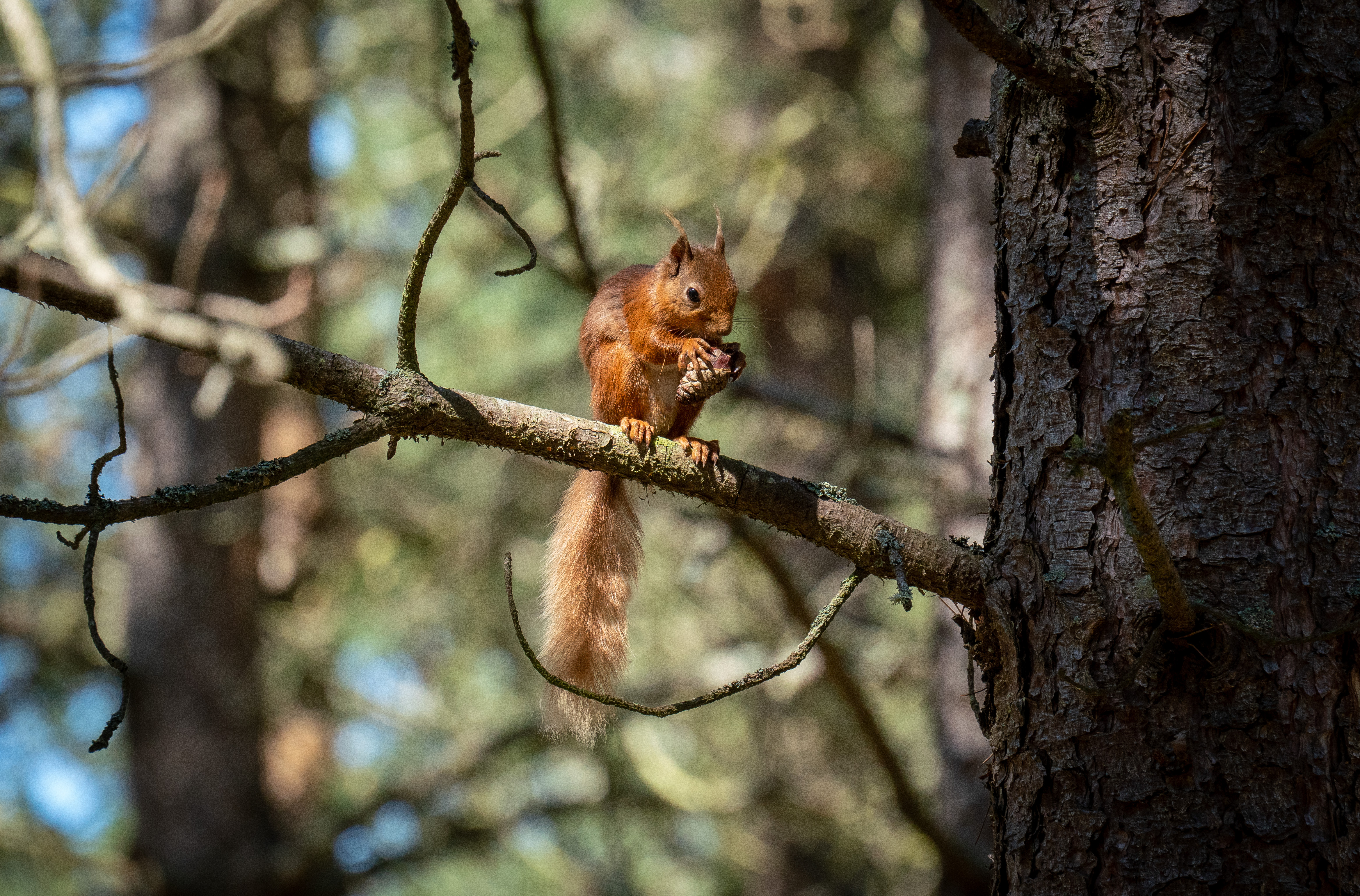
Red squirrel range in Highlands increases by over 25% following major reintroduction project by rewilding charity

Red Squirrel image (c) Chris Aldridge
The range of red squirrels in the Scottish Highlands has increased by over 25% following a 10-year reintroduction project by rewilding charity Trees for Life.

Surveys show over a dozen new populations of reds are now thriving and breeding successfully, with many spreading and linking up, and others likely to do so in future.

Following the latest reintroductions this year, Trees for Life has so far relocated 259 red squirrels to 13 new sites in the northwest Highlands from which the species was missing.

Reds are now present as far north as Ullapool and Brora, at multiple locations on the northwest coast, at Morvern to the southwest, and across all areas of suitable habitat in the central Highlands as far north as Lairg, Trees for Life’s latest survey found.

“This rewilding success story is offering hope for the long-term survival of Scotland’s much-loved red squirrels, and shows how we can make a real and positive difference to our native wildlife,” Trees for Life’s Becky Priestley told That's Green.

The charity now plans to expand the species’ range further as part of an ambitious new Missing Species Programme for the Highlands, which it is to launch to bring back four of Scotland’s keystone animals which are partly or fully missing from Scotland.

Although an iconic Scottish species, the red squirrel was brought to the edge of extinction in Britain by historic habitat loss and human persecution. Its recovery remains at risk due to competition from the non-native grey squirrel, which also carries the fatal squirrel pox virus.

During the NatureScot-licensed reintroductions, Trees for Life carefully relocates small numbers of reds from healthy populations around Inverness-shire, Moray and Strathspey to suitable woods in the north and northwest, where they will be safe from greys. Red squirrels can’t reach these havens without help, because they avoid crossing large open spaces.

The latest releases this year saw 12 reds reintroduced to woodlands along the coast from Letterfearn to Ratagan on the Glenelg peninsula, to bolster the population after seven squirrels were released the previous autumn.

Estimates of UK numbers of reds range from just 160,000 to 287,000. Scotland is today the British stronghold for the woodland-loving species – home to 80% of the population.

Before the reintroductions, reds were absent from most of their former range in the north and northwest Highlands, with the last records generally from the 1970s. Trees for Life’s surveys show reintroductions have been highly successful, already increasing the Highland red squirrel range by more than 26%.

Prior consultations are carried out at each release site. Only a few reds are relocated from each donor site to leave those populations unaffected, and these sites are regularly changed to ensure genetic diversity. Checks ensure only healthy animals are relocated.

With animal welfare paramount, the reds are transported in hay-lined nest boxes and released into habitat with plenty of natural food and shelter. Additional food is provided for several months as the reds get used to their new habitat.

Since launching the project in 2015, Trees for Life has established new populations of reds in Shieldaig, Coulin, Plockton, Inverewe, Reraig, Attadale, Letterewe, Lochaline, Spinningdale, Golspie, Arisaig, Drimnin, and Ratagan.

Combined with the previous work of the Roy Dennis Wildlife Foundation, which pioneered the reintroductions to three other sites, in total more than 340 red squirrels have been relocated to 16 new sites in the Highlands since 2008.

“Our local community volunteers have been at the heart of this project – from identifying donor sites, to helping with supplementary feeding and taking part in citizen science by reporting sightings and monitoring camera traps,” added Becky.

A detailed new red squirrel distribution map for the Highlands to inform future restoration initiatives has been created by the charity. This draws on citizen science sightings, data from organisations and landowners, and a new way of analysing squirrel feeding evidence.

Trees for Life’s surveys also highlighted the benefits of reforestation, and how further woodland restoration could help some isolated populations of reds to spread. Squirrel reintroductions in turn help forests naturally expand, because reds plant new trees by forgetting where they have buried their winter stores of nuts and seeds.

In November, Trees for Life announced it is to launch a £3.6m Missing Species Programme for the Highlands, focused on red squirrels, lynx, beavers, and modern-day aurochs. Alongside a supporter appeal to raise an initial £25,000 to kickstart the initiative, Trees for Life is reaching out to major funders to help resource the ambitious new programme.

See treesforlife.org.uk/missing-species for more details.

Thursday, 30 October 2025

New law says large landowners need to set out biodiversity plans, in ‘big step towards a Rewilding Nation’

MSPs in the Scottish Parliament have voted this week to create a law obliging owners of large landholdings to publish plans on how they will increase biodiversity, as part of the new Land Reform Bill, in what the Scottish Rewilding Alliance says is a ‘big step towards a Rewilding Nation’.

The Scottish Rewilding Alliance has campaigned for the change as part of its Rewilding Nation campaign, supported by thousands of people across Scotland.

The new law will require landowners of landholdings over 1,000 hectares to set out how they are boosting biodiversity, as well as adapting to climate breakdown.

They will also have to lay out how they are complying with the Scottish Outdoor Access Code, complying with the code of practice on deer management, and contributing towards net-zero emissions.

While many responsible landowners will already be taking steps to restore nature and ensure ecosystem health, all large landowners will now have a legal duty to consult on and publish land management plans, once the Scottish Government has put the required regulations in place.

The Alliance says Scotland’s largest landholdings have a pivotal role to play in repairing Scotland’s biodiversity, mitigating against the effects of climate breakdown and enabling Scotland to adapt to a changing climate.

Steve Micklewright, co-convenor of the Scottish Rewilding Alliance, and chief executive of Trees for Life which owns the 4,000-hectare Dudreggan estate near Loch Ness, told That's Green: “This new law represents a big step towards Scotland becoming the world’s first Rewilding Nation.

“How land is managed is a key part of tackling climate breakdown and reversing biodiversity loss – and in Scotland, where land ownership is highly concentrated, large landholdings have a key role in repairing Scotland’s ecosystems.

“Ensuring large estates set out their plans to restore nature is vital. Rewilding – large-scale restoration of ecosystems and natural processes – offers hope for tackling the nature and climate emergencies, and creates a cascade of benefits for people.”

There are 1,810 landholdings in Scotland over 1,000 hectares. Some landholdings are already restoring nature at scale, but currently the lack of land management plans laying this out makes data collection difficult.

The successful change to the bill was proposed in Parliament by Ariane Burgess, Scottish Greens MSP for the Highlands and Islands. The change received cross-party support.

While celebrating the success, the Scottish Rewilding Alliance says that with Scotland being one of the world’s most nature-depleted countries in the world, the Scottish Government needs to be more ambitious going forwards. This includes putting in place support and funding to enable large landowners to restore biodiversity and take upscaled action to ensure ecosystem health.

Although the Scottish government is committed to protecting at least 30% of land and sea for nature by 2030, just 2.5% of Scotland’s land is currently rewilding, with current rates of increase meaning it will take 65 years before major nature restoration is underway across 30% of the country.

Rewilding is the large-scale restoration of nature to a state where it can look after itself and people, focusing on restoring natural processes and, where appropriate, reintroducing missing species.

The Scottish Rewilding Alliance is calling on the Scottish Government to declare Scotland the world’s first Rewilding Nation, bringing in bold legislation to support rewilding. Polling has shown this is supported by over 80% of the Scottish public.

The Alliance’s Pathway to a Rewilding Nation lays out a clear vision for a wilder, fairer future for Scotland. Political parties are being asked by rewilding campaigners across the country to put rewilding in their manifestos ahead of the 2026 elections.

The Rewilding Nation campaign has been backed by thousands of people from all walks of life across Scotland. It has received public backing from Scottish actors Brian Cox and Alan Cumming, Scottish musician Nathan Evans, Hollywood A-lister Leonardo DiCaprio, and activists Laura Young (Less Waste Laura) and Somhairle.