Showing posts with label Bear. Show all posts

Monday, 2 March 2026

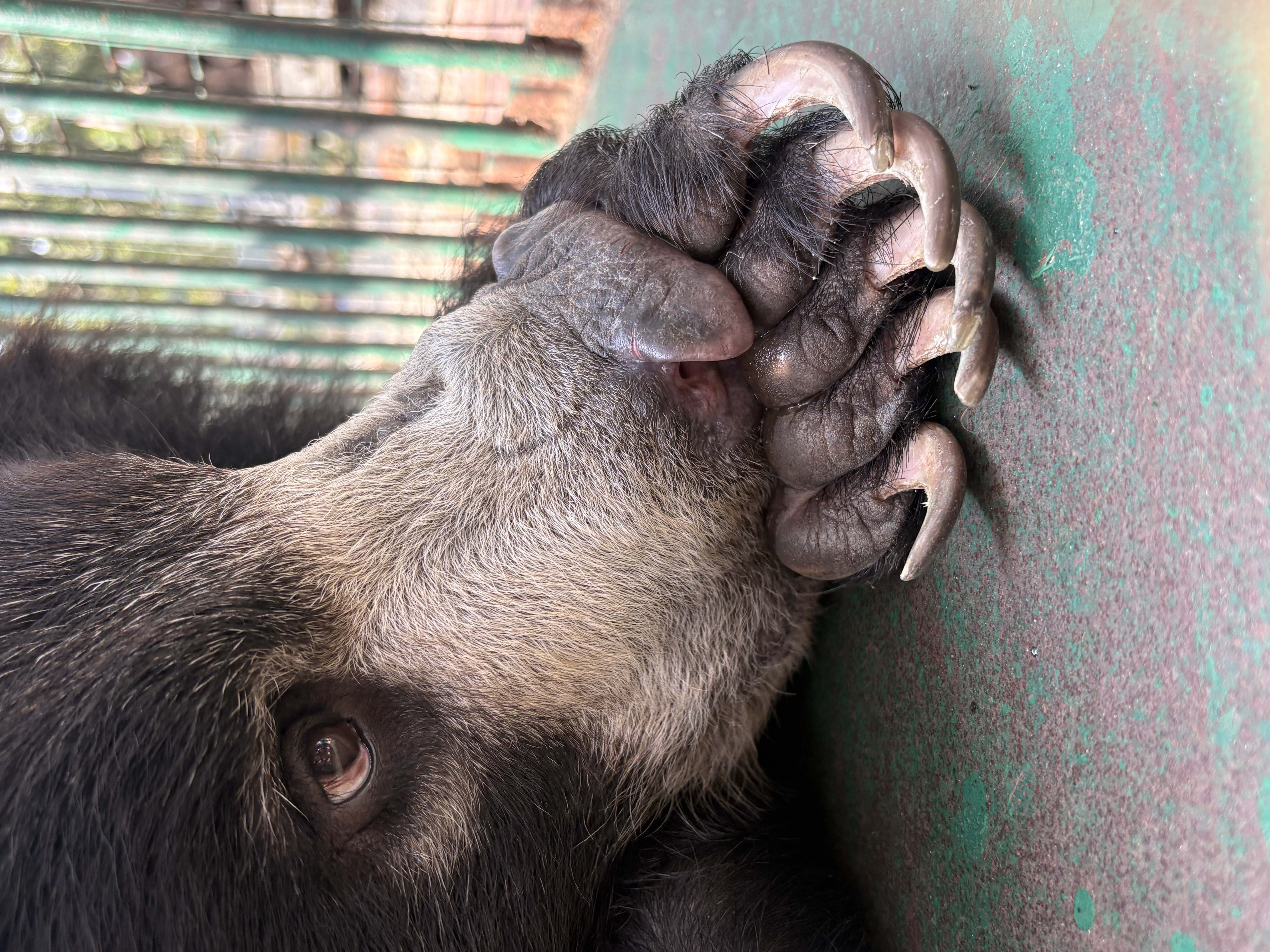
World Wildlife Day Warning: as rescued baby bear Lissy sends a stark message about vigilance against the wildlife trafficking trade

The dancing bear trade ended in 2009, so this World Wildlife Day, 3rd March, why are we writing about another bear cub rescued in recent months? 

Progress has been made, but poachers persist in the wildlife trafficking trade.

International Animal Rescue is calling for continued support against wildlife trafficking on World Wildlife Day after a young sloth bear cub, Lissy, was rescued from the illegal ‘dancing’ bear trade 17 years after it was officially eradicated.

The three-year-old cub was rescued from the Jharkhand–West Bengal border following a tip-off to forest officials. Spotting their approach, the trafficker threw the cub onto the floor before running off.

The baby bear, named Lissy, had gruesome injuries. Her muzzle had been pierced, and a rope had been forced through it, and her canine teeth had been smashed out. 

She was emaciated and thirsty. Her injuries are a trademark of the horrific dancing bear trade, which forces cubs away from their mothers and tortures them into ‘performing’ in agony. Lissy’s injuries reflect why this practice was outlawed in 1972 and eradicated fifteen years ago.

In 2009, after many years of hard work from both International Animal Rescue and Wildlife SOS, more than 620 bears had been rescued and taken into sanctuary. So why was another cub still trafficked?

Alan Knight OBE, President of International Animal Rescue, told That's Green: “We cannot become complacent. 

"We thought that the dancing bear trade had stopped, but this latest rescue proves otherwise, as traffickers are still attempting to sneak bears across borders. We named her Lissy, after our beloved colleague Lis Key, who spent her career working to end this practice. 

"I know she’d be proud to see this cub, which is now safe and happy. We are calling for support to increase vigilance and to raise awareness.”

Native to South Asia, sloth bears (Melursus ursinus) are classified as Vulnerable and continue to face threats from habitat destruction, poaching and illegal trade.

This World Wildlife Day, International Animal Rescue is asking for support to continue enforcement, maintain cross-border vigilance and urge the public to help prevent this torturous trade from happening again as well as supporting Lissy bear.

To help them keep up the fight against wildlife traffickers, please visit: https://www.internationalanimalrescue.org/animals/indian-sloth-bear

Thursday, 26 February 2026

International Polar Bear Day: Why Arctic Conservation Matters More Than Ever

Discover why International Polar Bear Day is important, how climate change affects polar bears, and practical ways you can support Arctic conservation from home.

Every year on 27 February, International Polar Bear Day shines a spotlight on one of the planet’s most recognisable, and increasingly vulnerable, animals: the polar bear. 

Organised by conservation groups including Polar Bears International, the day is designed to raise awareness about the challenges these Arctic giants face in a warming world.

For a sustainability-focused platform like That’s Green, it’s a moment to pause and consider not just the fate of one species, but what polar bears represent in the broader climate conversation.

Why Polar Bears Are Under Threat

Polar bears (Ursus maritimus) are uniquely adapted to life on sea ice. They rely on it as a platform to hunt seals, rest, and in some cases travel vast distances. The problem? Sea ice is shrinking.

According to climate scientists, Arctic sea ice has declined dramatically over the past few decades due to rising global temperatures. This directly affects polar bears’ ability to feed, leading to longer fasting periods, lower body weights, and reduced cub survival rates.

The species is currently listed as vulnerable on the global conservation scale, with estimates suggesting around 20,000–25,000 individuals remain in the wild across the Arctic regions of Canada, Greenland, Norway, Russia and Alaska.

The Climate Connection

Polar bears have become a powerful symbol of climate change. While their image is often used in environmental campaigns, the science behind their vulnerability is starkly real.

When sea ice forms later in the year and melts earlier in spring, polar bears have less time to hunt. This means:

Fewer fat reserves to survive the summer

Lower reproductive success

Increased human-wildlife conflict as bears move closer to settlements in search of food

The Arctic is warming nearly four times faster than the global average. What happens there doesn’t stay there – melting ice affects global weather patterns, sea levels and ecosystems worldwide.

What International Polar Bear Day Encourages

International Polar Bear Day focuses on practical climate actions. Organisations such as World Wildlife Fund and Polar Bears International often promote:

Reducing home energy consumption

Switching to renewable electricity suppliers

Improving insulation and heating efficiency

Supporting climate-conscious policies

Educating others about Arctic conservation

The aim isn’t guilt, it’s momentum. Small actions, multiplied across communities, create measurable change.

How You Can Mark the Day

You don’t need to travel to the Arctic to make a difference. Here are meaningful ways to observe International Polar Bear Day:

Reduce Your Carbon Footprint

Review your household energy use. Could you switch to LED lighting, lower your thermostat slightly, or explore green tariffs?

Learn and Share

Read about Arctic ecosystems and share reliable information through your social media channels. Raising awareness matters.

Engage Young People

Polar bears capture children’s imaginations. Use the day to spark conversations about wildlife protection and sustainable living.

Support Conservation

Consider donating to reputable organisations working in Arctic research and habitat protection.

Why It Matters Beyond the Arctic

Polar bears are not just distant wildlife in a frozen landscape. They are indicators of planetary health. When their habitat disappears, it signals wider environmental instability.

For readers of That’s Green, International Polar Bear Day is a reminder that sustainability is interconnected. From energy choices in UK homes to global climate agreements, our decisions ripple outward.

Protecting polar bears ultimately means protecting ecosystems, coastal communities, and future generations.

And perhaps that’s the most powerful message of all.