Showing posts with label International Animal Rescue. Show all posts

Thursday, 3 September 2026

Take the Plunge for Wildlife at Abseil for Animals 2026

Individuals and businesses are being invited to step outside their comfort zones and descend one of Sussex’s most striking natural landmarks while raising vital funds for animals in need.

International Animal Rescue’s Abseil for Animals 2026 will take place at Peacehaven Cliffs on Saturday 26 September, shortly before World Animal Day in October.

Under the supervision of professional instructors, participants will abseil 115 feet down Peacehaven’s iconic chalk cliffs. The exhilarating challenge is open to individuals as well as companies searching for an unusual and worthwhile team-building experience.

For workplace teams, the event offers an opportunity to leave everyday pressures behind, build trust and support colleagues as they face the challenge together. International Animal Rescue can allocate time slots to corporate groups, allowing colleagues to complete their descents together and cheer one another on.

Companies can enter a single team or invite employees from across the organisation to participate. They may also match the money raised by staff, establish a company-wide target or encourage some friendly competition between departments.

International Animal Rescue President Alan Knight OBE told That's Green: “Nobody sets off to climb a 115ft cliff feeling confident! Having your colleagues next to you, cheering you on and taking on the same challenge really brings you together. It’s about trust, support and celebrating your achievements together.

“It’s a fantastic way to invest in your people, bring colleagues closer together and show your customers you care about animals worldwide.”

Phily Day from International Animal Rescue, who has previously completed the abseil, described the experience as beneficial to her mental health and wellbeing.

“It was nerve-wracking standing over the edge of that liff, but once I went, I knew I could do it,” she said. “When I reached the bottom, I felt such a sense of achievement. It was a nice reminder that we can achieve far more than we think, especially when we have other people encouraging us.”

Registration costs £15, and every participant is asked to raise at least £125 in sponsorship. Everyone taking part will receive an official International Animal Rescue T-shirt, while members of the charity’s team will be at Peacehaven to offer encouragement throughout the day.

Money raised will support International Animal Rescue’s work with community projects around the world. This includes rescuing animals from suffering, providing veterinary treatment and rehabilitation, and helping to protect endangered wildlife and threatened habitats.

To learn more or register for the challenge, visit International Animal Rescue’s adrenaline challenges page https://www.internationalanimalrescue.org

Friday, 15 May 2026

The Slow Loris Is Fighting Back Against the Illegal Pet Trade

There are some animals that instantly melt hearts online. 

The slow loris, with its enormous eyes, tiny hands and teddy-bear appearance, is one of them.

But behind many of those “cute” social media videos lies a far darker reality, illegal wildlife trafficking, cruelty and the destruction of endangered species populations.

But now Now there's finally some encouraging news.

Ahead of Endangered Species Day, Indonesian conservation organisation Yayasan Inisiasi Alam Rehabilitasi Indonesia (YIARI), working in partnership with International Animal Rescue, has released a powerful new report showing determined conservation work really can make a difference.

The report, Out of the Shadows: Exposing and Opposing Indonesia’s Illegal Slow Loris Trade, reveals how more than a decade of rescue work, education campaigns, law enforcement action and public awareness efforts have helped dramatically reduce the illegal trade in slow lorises across Indonesia.

A “Cute” Animal With A Serious Problem

Slow lorises are among the most heavily trafficked primates in Southeast Asia. Their popularity exploded online after viral videos portrayed them as adorable exotic pets. Sadly, many viewers had no idea these animals are protected species or that the pet trade causes immense suffering.

Wild slow lorises are often captured illegally, transported in terrible conditions and sold through markets or social media groups. In many cases, traders even remove their teeth to stop them biting owners, leaving the animals unable to survive properly in the wild.

According to the report, researchers from YIARI identified activity in at least 469 Facebook groups linked to slow loris trading between 2012 and 2022. More than 5,000 online sale posts were recorded, with at least 4,100 slow lorises being offered for sale online.

Physical wildlife markets also remained a major problem, with surveys recording over 1,300 slow lorises being sold openly.

The Good News? Things Are Changing

What makes this report so important is that it does not simply highlight the problem, it shows that progress is possible.

Over the years, conservationists, law enforcement agencies and policymakers worked together to crack down on wildlife crime. The results have been significant:

111 wildlife crime enforcement cases linked to slow lorises were recorded

1,271 slow lorises were confiscated

Around 78% of cases resulted in arrests

More than half led to successful convictions

Over 1,300 rescued slow lorises were cared for through YIARI’s rehabilitation network

Perhaps even more encouraging is the change in public attitudes.

Back in 2015, around 90% of Instagram content featuring slow lorises presented them as pets or entertainment. By 2022, that kind of content had sharply declined, while educational and conservation-focused posts increased dramatically.

That shift matters because wildlife trafficking often survives on ignorance. The more people understand the damage caused by the exotic pet trade, the less demand there is for these animals.

Conservation Is About People Too

One of the strongest messages in the report is that wildlife conservation is not just about rescuing animals — it is about changing behaviour.

Dr Karmele Llano Sánchez explained that rescue work alone cannot solve the issue if the root causes of wildlife crime are ignored.

Instead, the success seen in Indonesia came from multiple groups working together: charities, journalists, enforcement agencies, government departments and public awareness campaigns all played a role.

Gavin Bruce said the findings prove illegal wildlife trading isn't something most people actually support, many simply did not understand the consequences before.

That's an important reminder in today’s social media age. Viral animal content may look harmless, but it can unintentionally fuel demand for endangered species.

A Rare Piece Of Environmental Good News

Stories about endangered wildlife can often feel overwhelming, but this is one of those rare examples where long-term conservation efforts are clearly working.

It shows that education, awareness and cooperation genuinely can reduce wildlife crime.

For environmental campaigners and animal lovers alike, that is something worth celebrating.

The Out of the Shadows report and companion book are available to download free online:

Indonesian version https://yiari.or.id/publikasi/keluar-dari-bayang-bayang/

English version https://yiari.or.id/publikasi/out-of-the-shadows-exposing-and-opposing-indonesias-illegal-slow-loris-trade/

To learn more about protecting slow lorises and supporting conservation efforts, visit International Animal Rescue’s Slow Loris campaign https://www.internationalanimalrescue.org/animals/slow-loris

Friday, 20 March 2026

"Please Look After This Bear" Celebrating World Bear Day and The Gift of Freedom for Retta, from Broken to Beautiful

World Bear Day (23rd March) is the perfect time to reflect on International Animal Rescue’s (IAR) work with bears, and one extraordinary tale of hope stands out. 

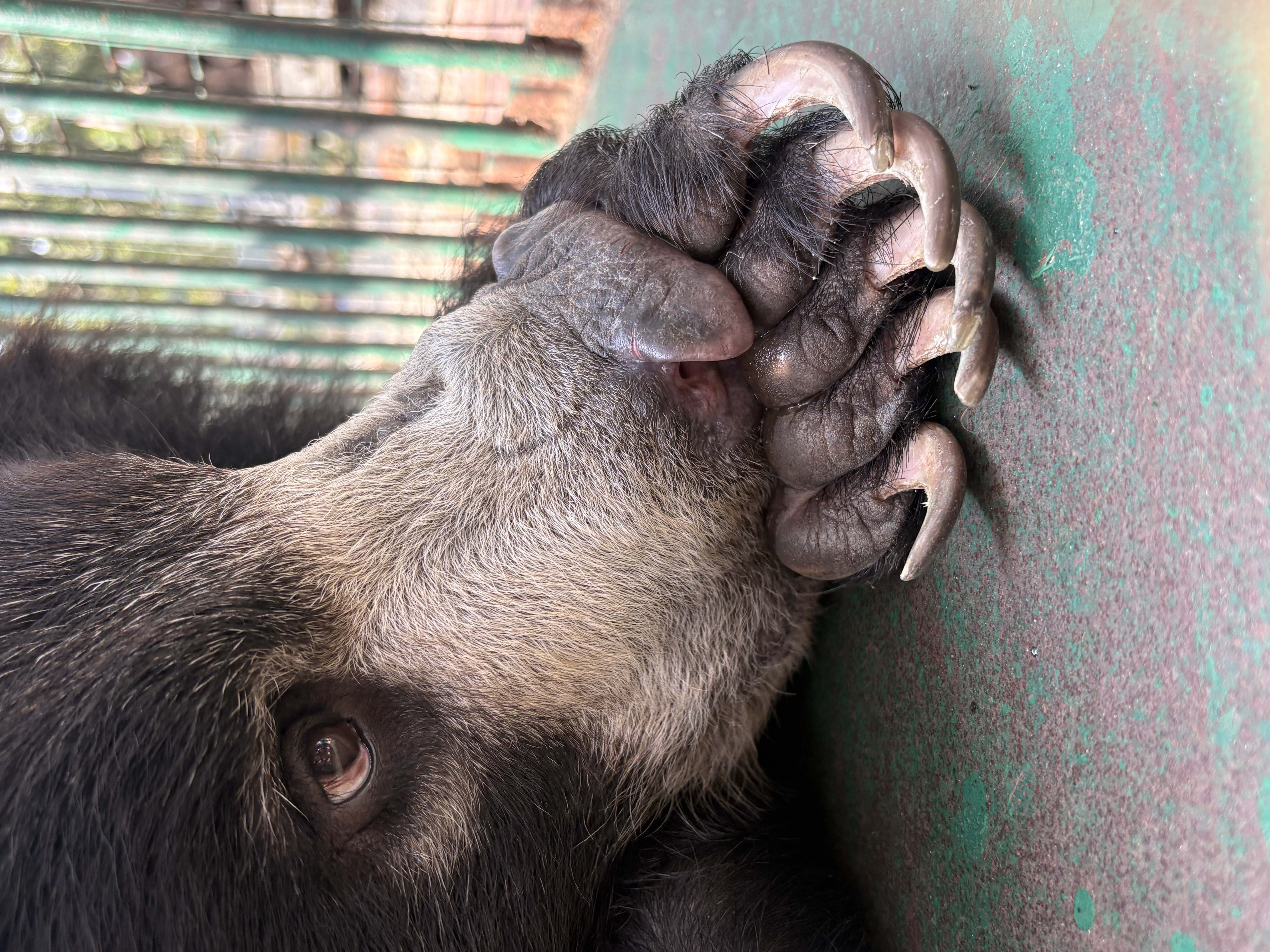
In 2024, the IAR team met Margaretta (Retta), an ex-circus bear who spent years confined in a tiny cage, serving as a sad spectacle for visitors at a tourist resort in Armenia. The tale was tragic and, as the photo clearly shows, heartbreaking for poor Retta.

But today, Retta's life is transformed. Thanks to an extraordinary rescue mission by International Animal Rescue (IAR) and its Armenian partners, FPWC (Foundation for the Preservation of Wildlife and Cultural Assets), Retta now roams freely.

Retta's heartbreaking journey began in captivity, where she suffered for many years of neglect and isolation. Her cage, a small concrete closet, was her entire world; with no chance to explore, play, or feel the earth's warmth beneath her paws, Retta's life was a shadow of what it should have been.

This changed when animal protection and conservation charity International Animal Rescue (IAR) and FPWC launched a daring rescue to free Retta from her cage and transport her to safety. Working tirelessly with local authorities and police; the team navigated logistical challenges to ensure Retta could begin a new chapter of life.

Two years on, Retta now lives a life where she is cared for and looked after at International Animal Rescue and FPWC's bear sanctuary, where she can finally live as nature intended, enjoying a life she never knew existed.

International Animal Rescue's President, Alan Knight OBE, told That's Green: "Rescuing Retta was a monumental effort, but seeing her rediscover her instincts and joy make it all worth it. Her resilience inspires us to keep fighting for animals like her, who desperately need a second chance at a life worth living."

Sharing Retta's story this World Bear Day couldn't be more timely, as Paddington the musical celebrates award wins sweeping across the board, Retta's story echoes this famous bear's plea: "Please look after this bear." Retta reminds us that acts of kindness, big or small, can create miracles. 

"But our work and Retta’s journey doesn’t stop here Retta will need daily care and support for the rest of her life, which is only possible because of our wonderful supporters.

International Animal Rescue invites you to read more inspiring stories or support our bears at www.internationalanimalrescue.org.

Thursday, 12 March 2026

Peek-A-Bear! Rescued mum and dad wake baby bear following her first hibernation

One year on ‘The great bear rescue’ family successfully hibernate in Armenia.

A year ago, International Animal Rescue (IAR) took part in the rescue of three Syrian brown bears, Aram, Nairi and their young daughter Lola

Today, IAR are happy to report that the bears have successfully undergone their first-ever natural hibernation period in the sanctuary, thanks to the expert care they received following their rescue.

When their colleagues at the Foundation for the Preservation of Wildlife and Cultural Assets (FPWC) discovered Aram and Nairi confined to filthy cages in someone’s backyard in Yerevan, Armenia, they had suffered years of appalling abuse. 

The pair were denied even basic husbandry and Nairi was regularly bred with by the owner to produce cubs which were sold on.

Little girl bear Lola was kept imprisoned with them and her mother, having been born in captivity. This winter, after months of recuperating from their rescue at FPWC’s wildlife rescue centre with support from International Animal Rescue, all three of these bears have been able to undergo their first-ever proper winter rest periods – a sure sign that they have physically recovered from their ordeal and learned to trust that rescue teams will keep them safe.

Confined to filthy cages and denied even the most basic of care, the bears were discovered during an investigation by the Foundation for the Preservation of Wildlife and Cultural Assets (FPWC) following a public tip-off.

Their rescue saw FPWC and International Animal Rescue coming together to secure their freedom. Described by International Animal Rescue (IAR) as their “most difficult rescue to date”, it took over 12 hours. The rescue involved a court-ordered confiscation, police intervention, and transport under heavy rain and during darkness.

This difficult rescue started when the team arrived at the property at 9 am, but the bear’s owner refused entry despite a legal order. 

After a prolonged standoff, they finally gained access as night fell and worked into the night to sedate and remove the bears from their appalling conditions.

Alan Knight OBE, President of International Animal Rescue was on the ground to witness their their rescue.

Alan told That's Green: “This difficult rescue started when the team arrived at the property at 9 am, but the bear’s owner refused entry despite a legal order. After a prolonged standoff, they finally gained access as night fell and worked into the night to sedate and remove the bears from their appalling conditions. 

"These bears had clearly suffered for many years and these were some of the worst conditions I have ever seen. The stench, the filth, the sheer cruelty of locking these animals up in tiny cages."

Today, thanks to veterinary care and round-the-clock specialist care at FPWC’s wildlife rescue centre, just a few months after the rescue, all three bears have been able to settle into their new home. 

“To see them happy and healthy, knowing they have a future now, makes everything we went through worth it. Completing their first hibernation and exhibiting these natural behaviours is an incredible sight. We are so grateful to the FPWC team and all of our donors and supporters for making this a reality.”

Donate to the bear appeal here https://www.internationalanimalrescue.org/appeal/bearfamily.

Monday, 2 March 2026

World Wildlife Day Warning: as rescued baby bear Lissy sends a stark message about vigilance against the wildlife trafficking trade

The dancing bear trade ended in 2009, so this World Wildlife Day, 3rd March, why are we writing about another bear cub rescued in recent months? 

Progress has been made, but poachers persist in the wildlife trafficking trade.

International Animal Rescue is calling for continued support against wildlife trafficking on World Wildlife Day after a young sloth bear cub, Lissy, was rescued from the illegal ‘dancing’ bear trade 17 years after it was officially eradicated.

The three-year-old cub was rescued from the Jharkhand–West Bengal border following a tip-off to forest officials. Spotting their approach, the trafficker threw the cub onto the floor before running off.

The baby bear, named Lissy, had gruesome injuries. Her muzzle had been pierced, and a rope had been forced through it, and her canine teeth had been smashed out. 

She was emaciated and thirsty. Her injuries are a trademark of the horrific dancing bear trade, which forces cubs away from their mothers and tortures them into ‘performing’ in agony. Lissy’s injuries reflect why this practice was outlawed in 1972 and eradicated fifteen years ago.

In 2009, after many years of hard work from both International Animal Rescue and Wildlife SOS, more than 620 bears had been rescued and taken into sanctuary. So why was another cub still trafficked?

Alan Knight OBE, President of International Animal Rescue, told That's Green: “We cannot become complacent. 

"We thought that the dancing bear trade had stopped, but this latest rescue proves otherwise, as traffickers are still attempting to sneak bears across borders. We named her Lissy, after our beloved colleague Lis Key, who spent her career working to end this practice. 

"I know she’d be proud to see this cub, which is now safe and happy. We are calling for support to increase vigilance and to raise awareness.”

Native to South Asia, sloth bears (Melursus ursinus) are classified as Vulnerable and continue to face threats from habitat destruction, poaching and illegal trade.

This World Wildlife Day, International Animal Rescue is asking for support to continue enforcement, maintain cross-border vigilance and urge the public to help prevent this torturous trade from happening again as well as supporting Lissy bear.

To help them keep up the fight against wildlife traffickers, please visit: https://www.internationalanimalrescue.org/animals/indian-sloth-bear