Showing posts with label farming. Show all posts

Tuesday, 3 March 2026

The Name's Changed But the Aim is the Same. Open Cages is Now Anima

The UK animal charity Open Cages has rebranded to Anima, reflecting its global identity as Anima International.

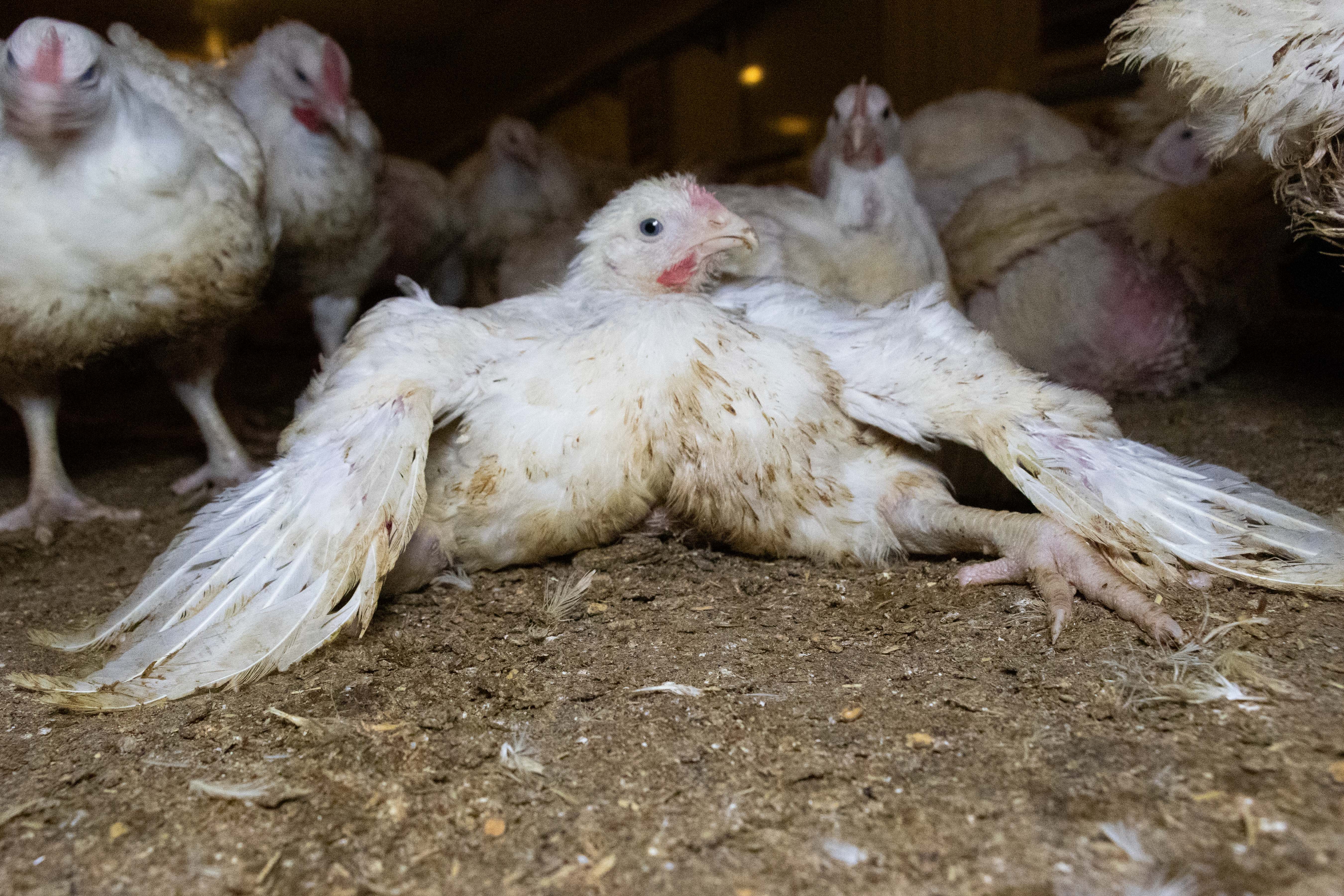
The change comes as Anima prepares to invest “more resources than ever” into its campaign to end the use of fast-growing “frankenchickens” in the UK.

The announcement follows major recent wins for Anima, including Poland’s fur farming ban and a world-first decision in Norway to phase out fast-growing chickens completely.

The UK is one of Europe’s largest chicken producers, with over 90% of chickens bred to grow at unnaturally fast rates, commonly leading to severe welfare problems, including chronic pain, lameness, and sometimes even heart attack. Anima International has identified the UK as a key strategic priority in its efforts to reduce animal suffering.

Commenting on the rebrand, Connor Jackson, CEO of Anima, told That's Green: “The breeding of fast-growing chickens represents one of the biggest sources of animal suffering in the world, and it’s a practice that is out of step with public sentiment.

"As a result, a transition is already happening in countries such as Norway, the Netherlands, Denmark and Germany. Our mission to achieve this in the UK hasn’t changed; we’re preparing to devote more resources than ever to this fight.

"Our new identity reflects our increasing focus on Britain as a priority for our entire organisation, given the snail’s pace at which we are solving this animal welfare crisis.”

Waitrose is the only major UK company to have totally phased out fast growing chickens, branding the practice an “animal welfare crisis.” M&S has done it for 30% of its products. KFC, Nando’s and several other restaurants recently abandoned their commitments to make the change. Whilst companies such as Pret and Greggs are yet to follow through on their commitments.

Anima International is a global animal advocacy organisation with six national groups, and two decades of experience working to end animal suffering. Now operating as Anima in the UK, the organisation plans to launch its largest UK campaign to date later this year.

anima.org.uk

Sunday, 17 July 2011

Tragedy for National Trust MyFarm's Shire Horse foaling

The National Trust's MyFarm team at Wimpole Home Farm in Cambridgeshire had been eagerly awaiting the foaling of Queenie, the only Shire Horse mare at Wimpole for weeks now.

As over 800 people or groups of people saw, Queenie went into her much anticipated labour. At 11.45pm she gave birth to a beautiful filly foal. Although she had a perceptible heartbeat when she was born she was not breathing. Emma, horse manager at Wimpole Farm, tried hard and long to get her to breathe with the help of farmer manager Richard Morris. A vet was on the phone throughout, talking the team through the procedures. None of their efforts could save her and she died a few minutes after her birth. Peacefully, we are told.

Richard said: "As you can imagine, we are all devastated by this awful and unexpected outcome. Although watchers of the foaling on the webcam saw the true, grim realities of animal husbandry this in no way belittles the personal sense of tragedy and loss we are all feeling. This bitter disappointment is tempered only with the fact that the filly foal did not suffer at all."

As part of the National Trust's MyFarm experiment, the birth was broadcast live over the internet. The project, which started in May, aims to reconnect people with the realities of life on a working, commercial farm allowing them to effectively become a farmer. The MyFarm Farmers can discuss and make decisions on every aspect of the farm: the crops grown, livestock, the new facilities to be invested in and the machinery to be used, much like a real life version of Farmville, the popular Facebook game.

As one MyFarm farmer commenting on the website just after the birth said: "I'm so sorry everyone. That was awful to watch, but I guess this is the reality of farm life sometimes. I felt so helpless watching the efforts to save her."

Richard continued: "It was a huge decision for us to do a live broadcast of the birth. There was never a guarantee that the foaling would be straight forward and unfortunately, this proved to be the case. But we didn't want to hide people from the risks involved - it's fundamental to the purpose of this project - to reconnect people with the realities of farming to allow the possibility of lows as well as highs."

In the morning, Queenie was doing well. She was turned out into her paddock to get some fresh air and Emma is speaking to the vet to find out the best way of stopping the milk production.

As Queenie is a fit and healthy mare, and due to it being prime horse breeding season, the team is keen that she gets back to the stallion again in approximately three weeks to see if she can become pregnant once more. There is no reason to believe that Queenie won't foal successfully in the future.


Monday, 13 June 2011

The National Trust announces live foaling at MyFarm

The National Trust has revealed it will be broadcasting the birth of a foal live over the internet as part of its MyFarm experiment.

Queenie, the only Shire Horse mare at Wimpole Home Farm in Cambridgeshire is preparing to give birth, and the live streaming - which can be viewed now - is a key part of the MyFarm project, which aims to reconnect people with the realities of farming. It is the first major birth on the farm since the project started in May, and it was a huge decision to broadcast it.

Richard Morris, farm manager, said: "There's no guarantee the birth will be straight forward, particularly as Queenie had a miscarriage last year and a previous foal had to be put down due to a deformity. We don't want to hide people from the risks involved - it's fundamental to our purpose in reconnecting people with the realities of farming to allow the possibility of lows as well as highs. If all goes well, MyFarm Farmers will be able to name the foal and so on, but not until it's a few days old. I'd be lying if I said I wasn't nervous, but that's reality."

Shire Horses are increasingly scarce with only 900-1,500 breeding females currently in the UK, and while they are no longer a core part of the working operations on the farm, this birth is a significant moment for the entire breed and for Wimpole's work with the Rare Breeds Survival Trust (RBST).

With no way of knowing exactly when Queenie will foal, a webcam has been installed in her stable and MyFarm Farmers will be able to watch the whole birth as it unfolds, live on the MyFarm website. Infrared lighting is being installed to ensure that viewers will still be able to see the birth, even at night.

In the meantime, Queenie is being carefully monitored by Wimpole horse manager, Emma Warner.

Queenie will be looked after 24 hours a day until she gives birth and the farm's vet will be on stand by in case he is needed.

Viewer can keep up-to-date with how Queenie is doing and watch the foaling live on the MyFarm website.

Thursday, 5 May 2011

The National Trust announces MyFarm experiment

The National Trust is looking for 10,000 people to take part in a mass on-line public farming experiment where they will make key decisions at one of the Trust's working farms at Wimpole in Cambridgeshire.

The MyFarm experiment aims to connect thousands of people with how food is produced by giving them a greater say in how a real working farm is run.

The Wimpole Farm Manager, Richard Morris, will set monthly options for the 10,000 Farmers, who will debate and vote on issues including whether to grow wheat, barley or oats as part of the autumn sowing, through to which animals to buy and rear.

For a small subscription fee, farmers will get a daily behind-the-scenes insight into how the 1,200 acre organic farm operates, the right to make decisions on the farm by voting regularly and a family ticket to visit the farm for a day.

The MyFarm website will include video updates, webcams, live webchats, debates and comment and opinion from both well-known farming experts and National Trust tenant farmers.

Results from a new survey published to mark the MyFarm launch reveal that people in Great Britain rate their knowledge of food and farming at an average of only 4.5 out of 10, with 75 per cent of respondents hungry to know more about how food is produced.

Mothers, in particular, show there is a need for a new way of learning - rating the importance of their children understanding where their food comes from at 7.5 out of 10, yet only 8 per cent felt confident that they knew enough to teach their children all about it.

Fiona Reynolds, Director-General of the National Trust said: "MyFarm is an exciting new project that will give thousands of families and classrooms across the country the opportunity to experience the highs and lows and often complex decisions that farmers face on a daily basis.

"As the country's biggest farmer - more than 80 per cent of the 250,000 hectares of land under our care is farmed in some way - it's our role to re-connect people with farming to promote better understanding and greater protection for the land on which we all depend."

Richard Morris, the National Trust’s Farm Manager at Wimpole said: "MyFarm is Farmville for real - real farming decisions with real farming consequences. By influencing the work at Wimpole our Farmers will start to understand the effects and implications of their own decisions. They will also witness first hand how unplanned events can turn a profitable year on its head.

"This winter hundreds of sugar beet growers have had to plough in their crops because of intense frost damage, resulting in a whole year of costs with no return. What surprises the weather holds for Wimpole this year only time will tell; but it will affect the farm’s success and the choices the Farmers can make."

With only 10,000 Farmer places available, interested parties should sign up now. More information can be found at www.my-farm.org.uk.