Showing posts with label animals. Show all posts

Tuesday, 14 July 2026

Naturewatch Foundation Calls for Faster Move Away from Animal Testing

New Government figures have reignited debate over the future of animal testing in Great Britain, with campaigners urging ministers to accelerate the transition towards modern research methods that no longer rely on animals.

According to the latest Annual Statistics of Scientific Procedures on Living Animals, Great Britain, around 2.54 million scientific procedures involving living animals were carried out during 2025. 

While this represents a 3.8% decrease compared with 2024, animal welfare charity Naturewatch Foundation believes progress is happening far too slowly.

The figures also reveal that over 17,500 procedures were classified as severe, meaning the animals involved experienced significant pain, suffering or distress. Of particular concern to the charity is the rise in the number of certain species being used for the first time.

The number of beagles increased from 1,593 to 1,640, while the number of non-human primates rose sharply from 1,478 to 1,845. The use of horses also increased, climbing from 60 to 100.

Naturewatch Foundation argues that these increases sit uneasily alongside the Government's commitment to phase out animal testing by investing in modern, human-relevant alternatives.

Laura Lendrum, Animal Experiments Campaign Manager at Naturewatch Foundation, said the latest statistics show there is still a long way to go.

She told That's Green that she welcomed the overall reduction in animal use but expressed concern that the number of beagles, primates and horses had increased. She said the Government's pledge to phase out animal testing now needs to be reflected in the statistics through a much faster shift towards research methods that are both more reliable for humans and avoid the use of animals altogether.

Scientists are increasingly developing innovative alternatives, including advanced cell cultures, organ-on-a-chip technology, computer modelling and artificial intelligence. Supporters believe these approaches can provide results that are more relevant to human biology while reducing the need for animal experiments.

Naturewatch Foundation hopes the Government's recently announced strategy, developed alongside researchers, industry and animal welfare organisations, will deliver measurable progress in replacing animal testing with these emerging technologies.

The charity is also encouraging consumers to play their part by supporting companies committed to cruelty-free practices. Its Compassionate Shopping Guide helps shoppers identify brands that do not benefit from animal testing, allowing purchasing decisions to contribute towards a future where scientific innovation and animal welfare go hand in hand.

For many campaigners, the latest figures serve as a reminder that while progress is being made, there is still considerable work ahead before animal testing becomes a thing of the past.

https://www.naturewatch.org

Friday, 27 February 2026

World Wildlife Day: Celebrating the Natural World We All Share

Every year on 3 March, World Wildlife Day reminds us just how rich, diverse and fragile our planet truly is.

Established by the United Nations in 2013, the day celebrates the world’s wild animals and plants while raising awareness of the urgent need to protect them.

From towering elephants roaming African plains to tiny pollinators working quietly in British gardens, wildlife shapes ecosystems, cultures, and economies across the globe. Without it, our world would be unrecognisable.

Why World Wildlife Day Matters

Wildlife is not simply something we admire on documentaries. It underpins food security, clean air, fresh water and even medicine. Yet biodiversity loss is accelerating due to habitat destruction, climate change, pollution and illegal trade.

Organisations such as WWF and The Wildlife Trusts warn that many species are declining at alarming rates. In the UK alone, hedgehogs, water voles and numerous bird species have seen sharp population drops over recent decades.

World Wildlife Day encourages governments, businesses and individuals to take meaningful action, not just admire wildlife, but actively protect it.

The Global Theme

Each year, the day adopts a theme highlighting a particular aspect of conservation,from marine ecosystems to forest restoration, youth engagement or wildlife crime prevention. These themes reinforce the idea that protecting wildlife requires cooperation across borders and sectors.

After all, wildlife does not recognise political boundaries. Migratory birds, ocean mammals and pollinating insects move freely — and depend on healthy habitats wherever they land.

How We Can Make a Difference in the UK

You don’t need to trek through the Amazon to support wildlife conservation. Action at home matters.

1. Support Local Conservation

Visit nature reserves managed by groups like RSPB or your local Wildlife Trust. Membership fees directly fund habitat protection.

2. Create Wildlife-Friendly Gardens

Plant native species, leave a patch of lawn unmown, or install a small pond. Even urban balconies can become mini sanctuaries for bees and butterflies.

3. Reduce Plastic and Waste

Marine wildlife, including species studied and protected by organisations such as Marine Conservation Society, are heavily impacted by plastic pollution. Reducing single-use plastics makes a real difference.

4. Choose Ethical Products

Look for sustainably sourced timber, palm oil and seafood. Consumer choices influence global supply chains.

Wildlife and Wellbeing

Spending time in nature benefits mental health and overall wellbeing, something increasingly recognised in modern Britain. A quiet walk in a woodland, a glimpse of deer at dusk, or even the sight of garden birds feeding can restore a sense of perspective.

Wildlife enriches not only ecosystems but our everyday lives.

A Shared Responsibility

World Wildlife Day is not just about saving distant species. It is about safeguarding the intricate web of life that supports us all.

Whether it’s protecting a rainforest thousands of miles away or helping hedgehogs cross your local road safely, every small action contributes to a larger movement.

The natural world is extraordinary. World Wildlife Day invites us to celebrate it, and more importantly, to protect it for generations to come.

Friday, 20 February 2026

New Global Alliance Promises to Advance Wild Animal Care Across South Africa

International animal welfare organisation Wild Welfare has joined forces with the South African Animal Keepers Association (SAAKA) to bring world-class support and expertise to wildlife caregivers throughout the region. 

An inaugural Memorandum of Understanding (MoU) has officially been signed to drive up standards of wild animal care and education at progressive zoos, aquariums, and sanctuaries across South Africa.

By increasing access to high quality educational materials and professional development, the two organisations aim to up-skill frontline animal care professionals and managers in key areas of animal care and welfare. 

By applying such learning, keepers have the opportunity to significantly help reduce captive-related stress, or better provide for an animal's need to promote their naturalistic behaviors for example.

 Ultimately, these improvements move the needle from mere survival to truly good welfare, allowing animals to thrive in a safe, stimulating environment.

SAAKA was established in 2024 to create a formal network for animal care professionals in South Africa, providing a voice for those who understand the intricate needs of the animals in their care. This partnership with Wild Welfare, a global leader in animal welfare training, will bring important expertise and resources directly to the South African animal keeper community.

“Authentic long-term relationships lie at the foundation of our work,” Dave Morgan, Field Director for Wild Welfare told That's Green.

 “This MoU is grounded in long-term, authentic relationships and a practical commitment to supporting staff on the ground, so that animals under human care are managed to thrive rather than simply persist.”

The formalised partnership hopes to increase the availability of advanced welfare training and learning opportunities for animal caregivers within SAKKA’s membership while establishing a platform for sharing resources, husbandry techniques, and progressive welfare research.

Robynn Ingle-Moller, Vice-President of SAAKA, highlighted the significance of the union, stating, “Keepers are the first responders in animal welfare.

"By banding together and partnering with an organisation like Wild Welfare, we are ensuring that the future of animal care in South Africa is grounded in compassion, science, and professional excellence.”

The MoU marks the beginning of a five-year journey dedicated to raising the bar for captive animal welfare and ensuring a brighter future for the thousands of wild animals housed across South Africa's managed facilities.

https://saaka.org.za

https://wildwelfare.org

Thursday, 12 February 2026

Tourists Urged to Boycott Exotic Animal Cafés as Welfare Charity Launches Public Pledge

Global animal welfare charity, Wild Welfare, has today launched a ‘call-to-action campaign’ urging for an end to the exploitation of wildlife within the exotic animal cafés across Asia. 

The ‘Just Say No’ pledge invites the public to look beyond the ‘cute’ aesthetics of these increasingly popular tourist spots, and to recognise the harsh and cruel realities lived by the animals kept within them.

The rise of animal cafés, particularly across Japan, has become increasingly visited experiences by tourists, likely driven, in part by their frequent social media exposure. 

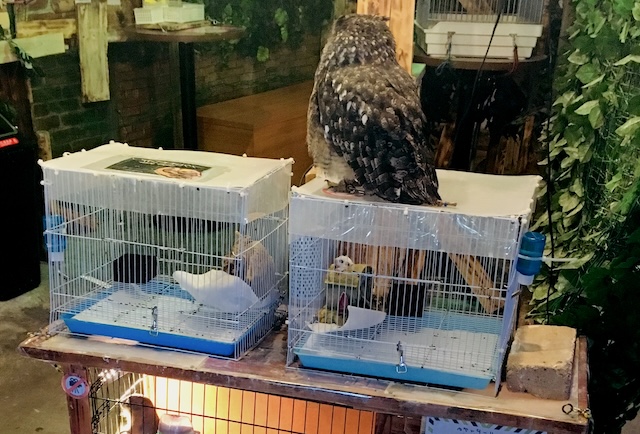
Guests are promised close-up encounters with exotic species such as owls, otters, capybaras and even fennec foxes, however, behind their “cute cafe” image, lies a stark reality of highly compromised animal welfare. 

Wild Welfare, working alongside a network of Japanese animal welfare NGOs’ and experts, is sounding the alarm on the distress these commercial environments are causing animals along with their risk to visitor health and safety.

“People visit these cafés because they ‘love’ animals, but the tragic irony is that their decision to visit fuels a cycle of suffering,” Georgina Groves, a Senior Animal Welfare Advisor at Wild Welfare, told That's Green.

“Our research and technical paper, carried out through the support of the charity ‘Animal Welfare Japan’, demonstrates that these crowded, noisy environments are fundamentally incapable of meeting the complex needs of wild animals. From over handling, to the inability of species to perform any natural behaviours; thousands of animals in these cafes are existing in a state of chronic stress.”

The ‘Just Say No’ pledge is part of a broader strategy which has seen Wild Welfare working with partners to advocate for the end of exotic animal entertainment cafes. The organisation provides technical expertise to assist the transition of the international tourism industry toward more ethical, welfare-friendly practices.

By taking the pledge, supporters are making a tangible commitment to the welfare of captive wild animals and helping to shift the global demand away from the over commercialisation of wildlife.

Take a few seconds to stand up for animal welfare and add your name to the online pledge today at https://wildwelfare.org/animal-cafe-pledge

Friday, 22 September 2023

World Animal Day children’s design competition: winner announced

There are countless ways in which everyone who cares about animals can get involved.

The winner of a World Animal Day 2023 children’s mug design competition has been announced, following a hugely successful event that saw entries from countries around the globe, including Turkey and Sri Lanka.

Ahead of the annual celebration of animals on October 4, young people across the world were invited to take part in an art contest to mark World Animal Day – the only day of the year that recognises all animals. Entries featured a wide variety of species including wildlife, insects, birds, marine animals and pets.

The winning design was created by 14-year-old Ruby from Oxfordshire in England, who submitted a beautifully colourful hedgehog holding a heart-shaped planet. The illustration will feature on a mug sold by Naturewatch Foundation, the UK-based animal welfare charity that coordinates World Animal Day.

Every year, hundreds of events are organised on, and around October 4 to raise awareness of animal welfare issues or fundraise for animal charities. Participants include schools, veterinary practices, community groups, animal welfare organisations and individuals who motivate their family and friends to also get involved. Since the first World Animal Day was held in 1925, events have become increasingly creative and now range from drive-through church blessings for animals to spay-a-thons for cats and dogs to abseiling down cliffs.

Sarah Carr, CEO of Naturewatch Foundation and coordinator of World Animal Day, said: “We were amazed to receive three times the number of entries to our mug design competition this year! Children in age categories from five to 17+ sent us wonderful drawings showing their love of animals – it was so difficult to choose a winner, but Ruby’s hedgehog will be perfect for our 2023 commemorative mug.

“The competition is just a small part of our phenomenal World Animal Day celebrations though. There are countless ways in which everyone who cares about animals can still get involved, including on social media – World Animal Day reaches over 50 million people online on October 4! We aim to raise awareness of the plight of animals and encourage people to do something to help make the world a better place for them. It’s a day for everyone to speak up for the voiceless, regardless of nationality, religion, faith or political ideology. If you want to be part of the biggest annual day for animals, visit the website today!”

For more information, and to get involved, go to worldanimalday.org.uk

Saturday, 2 September 2023

Photography Competition Supporting Conservation – Finalists Announced

The 12 images highlight the beauty and colour of our planet while also helping to raise awareness about its fragility.

The finalists of the 2023 Focus for Survival photography competition are announced. The competition has been running since 2019, and every year has seen a burgeoning number of fantastic entries from amateur and professional photographers, worldwide.

Photographers were given the task of capturing images celebrating the natural world. Entries ranged from the icy heights of the Himalayas in Pakistan to the sparkling blue waters of the Caribbean Sea off Dominica.

Norfolk-based conservation charity Explorers Against Extinction, in partnership with Bradt Travel Guides, the world's leading independent publisher, organise the annual image competition. The finalists feature in a fundraising calendar, on sale from September.

Funds raised support specific conservation projects focused on recovering key species and restoring ecosystems.

The expert panel of judges included award-winning wildlife photographers/authors Noril Jemil and James Lowen.

Sara White, who is a trustee of Explorers Against Extinction said: “The standard of photography has been extremely high this year. The 12 images take us on a journey around the world, highlighting the beauty and colour of our planet while also helping to raise awareness about its fragility.”

Finalists include amateur photographer Tracey Graves, who is a 48-year-old doctor from Cambridge. Graves took her winning image in Mara North Conservancy in Kenya, shortly after recuperating from major surgery.

Tracey Graves said: “ We'd sat with two sleeping cheetah brothers for over an hour, and they didn't seem inclined to move. I'd jokingly said to our guide that it would be nice to get a silhouette of a cheetah up a tree. As the sun went down the cats started to stretch. The other few vehicles at the sighting left for sundowners and we were rewarded with the shot I'd asked for, with just enough light to play with.”

Professional photographers making the final 12 include Celia Kujala, an award-winning wildlife and underwater photographer from the United States with her endearing portrait of a stellar sea lion, taken in British Columbia, Canada, and Paddy Scott, a photographer and cameraman based in London, UK, studying an MSc in Global Environmental Politics and Policy.

Scott’s dramatic monochrome image captures an avalanche at K6 in the Himalayas, Pakistan. Scott said: “ I was there photographing a climbing expedition attempting a nearby unclimbed peak. Shortly after arriving at base camp, a massive fall of unseasonable snow coated all the surrounding mountains. As weather patterns change across the planet due to global heating, weather patterns are becoming ever more unpredictable.”

The public have an opportunity to select their favourite image by voting in the People’s Choice Award (closes 22 October).

To learn more please visit explorersagainstextinction.co.uk

We at That's Green believe that this calendar will make an absolutely excellent Christmas gift for this year.