Showing posts with label waste. Show all posts

Thursday, 4 June 2026

Friends continue to make a difference on the A82 in Scotland

Volunteers from JP Morgan & AECOM turned out on a rainy Wednesday 3rd of June morning to try to reduce the litter which continues to gather along the shores of Loch Lomond.

The event was organised by The Friends of Loch Lomond and The Trossachs (FOLLATT), a long established conservation charity which operates in and around Scotland’s busiest National Park, and was assisted by the Grab Trust who provided the litter picking equipment.

Their Chairman, John Urquhart, told That's Green: “This, our second Make a Difference (MAD) event of 2026, concentrated once again on tackling the ongoing problem of littering which blights the loch side along the busy A82 between Arden and Ardlui. 

"We were especially keen to see how the removal of our lay-by bins was impacting the situation and were initially heartened to note that the lay-bys and intervening verges were generally quite presentable. 

"However, as we feared, the cleanliness was only superficial, as it quickly became clear that a substantial number of people were once again disposing of litter by throwing it into the undergrowth.

"Enquiries revealed a workforce from Argyll and Bute had indeed carried out a litter clearance operation of the road a few weeks ago, as they normally do at the start of the tourist season, but it was obvious to us this had not been an in-depth operation.

"Sadly, this just reaffirms our view that the two responsible authorities, Argyll and Bute and The National Park are continuing to neglect their duty to tackle this important issue effectively.

Meanwhile it looks like our hard-working volunteers are going to have to keep turning out to do their best to keep the bonnie banks looking their best.”

Mr Urquhart added that he wished to thank the Lodge on Loch Lomond Hotel for hosting the event and supplying FOLLAT’s somewhat damp volunteers with a delicious snack at the end of the event.

https://www.lochlomondtrossachs.org.uk

Incidentally, That's Green has launched a nationwide initiative some under the title "Don't Be a Sinner, Be a Binner!"

It calls for everyone to do their part in helping to ensure that bins are used for rubbish and that our environment is kept clean. Discarded rubbish and trash can kill pets and wildlife so it's not merely a matter of discarded items looking a mess.  

If you follow this link to the blogpost you will find useful resources and advice on how to help to be a binner and not a sinner.

https://thatsgreen.blogspot.com/2026/03/dont-be-sinner-be-binner.html

Tuesday, 14 April 2026

From Plantation Waste to Wardrobe: How Banana Farming Is Inspiring Sustainable Materials

Every year, millions of tonnes of bananas are harvested around the world. Yet few people realise that the fruit we eat represents only a tiny portion of the banana plant. 

Once a bunch of bananas is harvested, the rest of the plant, including the thick trunk-like pseudostem, leaves, and fibres, is often discarded. 

Traditionally, this agricultural waste has been left to rot in fields or burned, contributing little value and sometimes adding to environmental problems.

Today, however, a growing number of innovators, designers, and agricultural researchers are transforming this waste into something remarkable: sustainable materials that can be used for clothing, textiles, packaging, and even construction.

Turning Banana Waste into Fibre

Banana plants are rich in strong natural fibres. These fibres can be extracted from the plant’s pseudostem, the thick stalk that supports the fruit, after harvesting. 

Instead of being discarded, the stalk can be processed using mechanical decorticators that separate the fibres from the plant pulp.

The resulting banana fibre is surprisingly versatile. It is naturally biodegradable, strong, and breathable, making it suitable for a wide range of textile applications. 

In some regions, particularly in parts of Asia, banana fibre has been used traditionally for centuries to produce fabrics, ropes, and mats.

Modern technology is now taking this age-old material to a new level. Innovative start-ups are refining the fibre to create soft yarns that can be blended with cotton, hemp, or recycled textiles. 

The result is a durable and environmentally friendly fabric that requires far fewer resources than many conventional materials.

Fashion Meets Sustainability

Several sustainable fashion brands have begun experimenting with banana-based textiles. Designers are using banana fibre to produce clothing such as jackets, shirts, and accessories that combine durability with a low environmental footprint.

Unlike synthetic fabrics derived from petroleum, banana fibre is entirely plant-based and biodegradable. Using agricultural by-products rather than newly grown crops also reduces pressure on land and water resources.

Some textile innovators are even developing leather-like materials made from banana plant waste. These alternatives to animal leather are gaining attention from environmentally conscious designers who want cruelty-free, low-impact materials.

Benefits for Farmers and the Environment

Beyond sustainability, banana fibre production offers an important economic opportunity for farmers. Instead of throwing away plant residues, growers can sell banana stems to fibre processors or operate small-scale fibre extraction units themselves.

This additional income stream can help support rural farming communities while reducing agricultural waste.

From an environmental perspective, utilising banana plant waste helps reduce methane emissions that can occur when organic material decomposes in large quantities. It also cuts down on the need for synthetic fibres, which often release microplastics into waterways.

A Circular Future for Agriculture

The banana industry is beginning to embrace a circular economy approach, one where nothing is wasted and every part of the crop has value. Fruit feeds the world, while stems and fibres can clothe it.

As consumers become more aware of the environmental impact of fast fashion and wasteful production systems, innovative materials like banana fibre offer a glimpse of a more sustainable future.

In the years ahead, the humble banana plant may not just be known for the fruit in your lunchbox — but also for the shirt on your back. 

Monday, 30 March 2026

Britain’s New Recycling Rules Explained: What “Simpler Recycling” Means for Households and Businesses

Britain’s new “Simpler Recycling” rules are changing how households and businesses sort waste. 

Discover what the new recycling system means, what bins you’ll need, and how it affects the environment.

Britain’s recycling system has long suffered from confusion. 

What you could recycle in one council area might be rejected in another. Different bin colours, different collections and different rules created a patchwork system that frustrated households and businesses alike.

That confusion is now being addressed through the Government’s “Simpler Recycling” reforms, a nationwide overhaul of how waste is sorted and collected across England.

The aim is straightforward: make recycling easier, more consistent and far more effective.

Ending the Recycling “Postcode Lottery”

For years, local authorities operated different recycling systems. Some councils collected paper and card separately; others mixed everything together. Some accepted certain plastics while neighbouring areas rejected them.

The new reforms aim to standardise recycling collections across England, creating a consistent set of materials that can be recycled regardless of where you live.

This should reduce confusion and improve recycling rates by making it clear what goes where.

The Four Core Waste Streams

Under the new system, households will generally be expected to separate waste into four main categories:

Food waste – including raw and cooked food, tea bags and leftovers

Paper and card – newspapers, cardboard packaging and similar materials

Dry recyclables – such as plastic bottles, cans, tins and glass packaging

Residual waste – non-recyclable rubbish that must go to landfill or energy recovery

Waste collectors across England must now provide collections for these streams, although the exact bin configuration may vary depending on local council arrangements.

A major change for many households will be weekly food waste collections, meaning kitchen caddies will become a routine part of domestic recycling.

Changes Already Affecting Businesses

Businesses actually faced the first phase of these reforms earlier.

Since March 2025, workplaces in England with 10 or more employees have been required to separate recyclable materials and food waste from their general waste streams.

Typical workplace recycling streams now include:

Plastic

Metal cans and foil

Glass

Paper and cardboard

Food waste

Smaller businesses will be required to follow the same rules by March 2027.

Why Food Waste Is a Key Focus

Food waste is one of the biggest challenges in the UK’s waste system. Large volumes still end up in landfill, producing methane and contributing to climate change.

By separating food waste at the source, councils can send it for anaerobic digestion, turning waste into renewable energy and fertiliser instead of landfill.

It’s a small behavioural change that could make a major environmental difference.

What Households Should Expect

Many households will notice several practical changes:

New or additional bins and food caddies

More detailed sorting guidance from councils

Changes to bin collection schedules

Clearer rules on what is and isn’t recyclable

Some councils that previously had only one or two bins may introduce three or four.

The goal is not necessarily more recycling bins, but better sorting and less contamination, which currently causes large amounts of recyclable waste to be rejected.

A Cultural Shift in Waste

Ultimately, the new recycling regime is about more than bins.

It represents a shift towards treating waste as a resource rather than a nuisance. Materials such as metals, plastics and food scraps can all be reused, recycled or converted into energy.

If the reforms succeed, Britain could see cleaner recycling streams, less landfill waste and a recycling system that people actually understand.

And that would be a welcome change.

Friday, 13 March 2026

Don’t Be a Sinner, Be a Binner!

A campaign from That’s Green

Litter is one of the simplest environmental problems to solve, yet it continues to spoil our streets, parks, and countryside. 

That’s why That’s Green is encouraging everyone to remember one simple message:

Don’t be a sinner — be a binner!

Every day, small pieces of rubbish such as plastic bottles, food wrappers, drinks cans, and takeaway containers are dropped in public places when a bin may only be a few steps away. When waste ends up on the ground instead of in a bin, it can harm wildlife, block drains, and make our communities look neglected.

Using a bin, and recycling when possible, is a small action that makes a big difference.

Recycling helps reduce landfill waste, saves energy, and cuts the need for new raw materials. Something as simple as recycling an aluminium can or plastic bottle helps reduce environmental impact and keeps valuable materials in use.

Being a “binner” simply means taking responsibility for your rubbish. Carry it until you find a bin, recycle where facilities exist, and encourage others to do the same.

If everyone makes this small change, the results could be huge: cleaner streets, healthier wildlife, and a greener environment for everyone.

So next time you finish a snack or a drink, remember the campaign slogan:

Don’t be a sinner — be a binner.

https://www.wrap.ngo/take-action/love-food-hate-waste/food-waste-action-week

https://www.zerowastescotland.org.uk/resources/some-best-litter-prevention-campaigns-around-world

https://www.keepbritaintidy.org

https://www.hellorayo.co.uk/greatest-hits/entertainment/seasonal-events/great-british-spring-clean-england

Sunday, 8 March 2026

A Call for a National Clean-Up Campaign for Britain’s Roads and Railways

A call for a nationwide UK campaign to clean roadside and railway verges, bringing together councils, schools, businesses and charities to tackle litter and protect wildlife.

Across the UK, millions of people travel daily along our roads and railways. These routes form the arteries of the country, connecting communities, businesses and families. 

Yet many of the verges lining these vital corridors are increasingly blighted by litter. Plastic bottles, takeaway packaging, discarded cans, papers, boxes and other waste often accumulate in plain sight, creating an environmental and visual problem that affects both wildlife and national pride.

It is time for a coordinated nationwide campaign to clean up Britain’s roadside and railway verges, one that brings together local councils, schools, colleges, rail operators, businesses and charitable organisations in a shared mission to restore these spaces.

Why Verge Litter Matters

Roadside and railway litter is more than just unsightly. It poses real environmental risks.

Plastic and packaging can easily be blown or washed into waterways, contributing to the UK’s growing microplastic problem

Wildlife is also affected: birds, hedgehogs and other animals can become trapped in, injured or even killed by discarded waste. In agricultural areas, litter can even harm livestock when it ends up in fields.

Beyond environmental harm, litter also damages the perception of our communities. Visitors arriving by train or travelling along motorways should see the best of Britain, green landscapes, thriving nature and well-kept surroundings — not piles of waste.

A Nationwide Solution

Cleaning up roadside and railway verges cannot fall on one group alone. A nationally coordinated effort could transform the problem into an opportunity for community engagement and environmental education.

Local councils could organise scheduled verge clean-up days and provide equipment, waste collection and safety guidance. 

Schools and colleges could integrate clean-up activities into environmental education programmes, encouraging students to take pride in their local area while learning about sustainability.

Businesses could support the campaign through staff volunteering days, sponsorship of clean-up equipment or by “adopting” sections of roadside or railway verges (with co-ordination with rail authorities) near their premises. 

Charities and community organisations already experienced in environmental volunteering could help coordinate local events and recruit volunteers.

Education and Prevention

Cleaning up existing litter is only part of the solution. A successful campaign must also focus on prevention.

Public awareness campaigns, including signage along roads and stations, could highlight the environmental impact of littering. 

Schools and youth groups could play a key role in educating younger generations about responsible waste disposal and recycling.

When communities work together on visible projects like verge clean-ups, attitudes can change quickly. People are less likely to litter in areas that are clearly cared for.

A Greener Vision for Britain

Imagine travelling along Britain’s roads and railways and seeing clean, flourishing verges filled with wildflowers and wildlife habitats rather than discarded rubbish. With coordinated action, this vision is achievable.

A nationwide verge clean-up campaign would not only protect wildlife and improve landscapes, it would also strengthen community spirit and demonstrate a shared commitment to protecting the environment.

Britain’s roads and railways connect us all. By working together, we can ensure the land alongside them reflects the pride we have in the country we call home.

Organisations that you can contact are:-

https://www.keepbritaintidy.org

https://cleanupbritain.org

https://www.gov.uk/government/collections/keep-it-bin-it-anti-littering-campaign

https://capstone-news.ghost.io/the-best-anti-littering-campaigns-science

https://nationalhighways.co.uk/our-work/environment/litter-resource

https://www.litternet.org.uk

https://www.zerowastescotland.org.uk

https://kidsagainstplastic.co.uk/1millionlitterpick

Friday, 20 February 2026

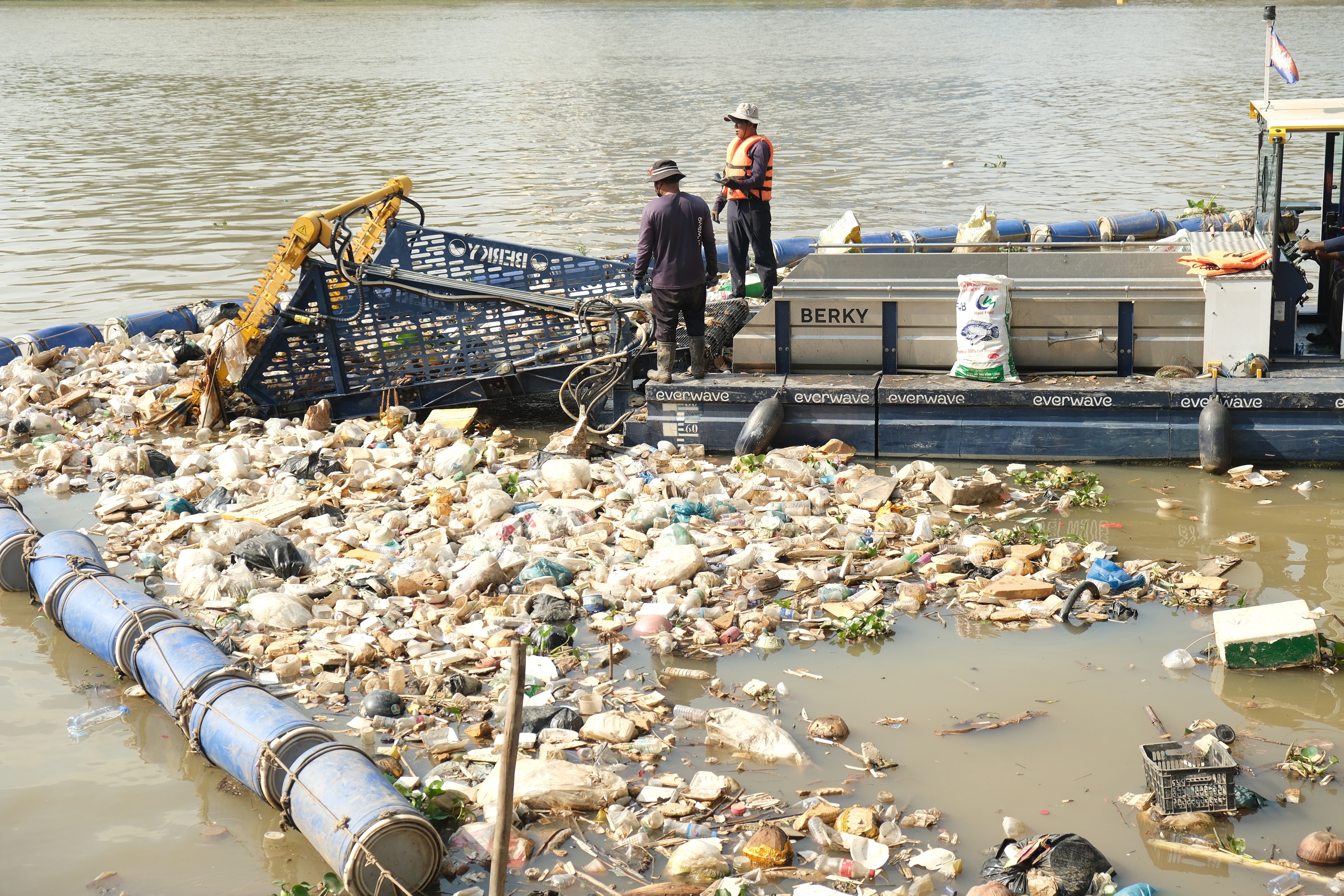
Clean energy needs a clean planet: PLAN-B NET ZERO and everwave launch joint initiative

PLAN-B NET ZERO announces a strong start to 2026 as it enters into a partnership with the Aachen-based environmental scale-up, everwave

With the guiding principle ‘1 euro = 1 kilogram of waste’, the partners recovered 10,000 kilograms of waste from rivers in Cambodia at the start of the initiative.

Around 11 million tonnes of plastic waste enter the oceans every year. 

Without effective countermeasures, this volume could almost triple by 2040. Studies show that about 80 percent of marine plastic reaches the sea via roughly 1,656 rivers worldwide. To date, everwave has removed in excess of a staggering 2.4 million kilograms of plastic from rivers in Cambodia, Albania, and Thailand. 

The company uses specially-designed  waste collection boats, barriers, and manual cleanups to stop plastic before it reaches the oceans. 

At the same time, mobile sorting and recycling solutions return materials efficiently to the circular economy. AI support optimises collection routes to clean as many waterways as possible in a sustainable way.

The partnership began in Cambodia, where the initiative’s waste collection boats operate in rivers and canals around cities.

 With this action, PLAN-B NET ZERO and everwave advance their shared vision of a clean and sustainable future.

“Together with everwave, we have already removed 10,000 kilograms of waste from rivers in Cambodia. We want to use our good energy in the best possible way, because clean energy alone does not help without a clean planet,” Julia Schnitger, Head of Marketing at PLAN-B NET ZERO, proudly told That's Green.

everwave carries out cleanups directly on site and works closely with local authorities and partners. This structure anchors the measures long term in the regions and creates measurable impact.

PLAN-B NET ZERO transforms 100% sustainable energy from a commodity into a lifestyle product

Their platform expands energy supply with digital and service-based offerings, as well as software and licensing. 

Data-driven optimisation, user-focused features, and additional services beyond pure energy supply create a new, integrated user experience.

You can learn more by visiting

www.planbnetzero.com 

and 

https://everwave.de/en

Thursday, 19 February 2026

Clean Planet Group Announces Strategic Investment by FTAI Infrastructure to Support Waste-Plastic Advanced Recycling Expansion, and Sustainable Aviation Fuel (SAF) Infrastructure Deployment

Clean Planet Group has received a strategic investment from FTAI Infrastructure (NASDAQ: FIP), managed by Fortress Investment Group

This marks the next phase of a partnership focused on scaling advanced waste-plastics recycling and sustainable fuels infrastructure across Europe and North America.

The expanded investment builds on the previous collaboration between FTAI Infrastructure and Clean Planet Group in the US and reflects a growing ambition to advance Clean Planet’s technology, project pipeline and international market opportunity.

The strengthened partnership broadens FTAI Infrastructure’s support beyond individual US project development to the wider Clean Planet platform.

Clean Planet operates across three integrated divisions: Energy, which develops, builds and operates advanced recycling facilities; Technologies, which focuses on proprietary refining processes and low-carbon fuels innovations; and the Clean Planet Foundation, the not-for-profit arm supporting education, engagement and impact. Together, their platform addresses two structurally linked global challenges: unmanaged plastic waste and the decarbonisation of hard-to-abate sectors.

Clean Planet Technologies’ progress in plastics-to-SAF aligns closely with FTAI Infrastructure’s long-standing commitment to sustainability and energy-transition assets and reflects the growing importance of SAF as a scalable, near-term solution for reducing aviation emissions. Last month, Clean Planet Technologies received grant support through the UK Government’s Department for Transport’s SAF Clearing House.

Dr Andrew Odjo, CTO and Co-Founder of Clean Planet Group, told That's Green: “FTAI Infrastructure has been a committed and highly aligned partner, and this next phase of investment enables our ambition to scale internationally. 

"Beyond our established advanced recycling business, we are building a technology-led platform that can supply lower-carbon fuels to sectors that urgently need them, which makes this a particularly exciting moment for the Clean Planet.”

The extended partnership will support the continued rollout of Clean Planet’s ecoPlant facilities, which produce circular feedstocks for downstream petrochemical manufacturers, further development of its clean fuels technology portfolio, and progression towards commercial-scale SAF production.

https://www.cleanplanet.com

Tuesday, 8 April 2025

Brushing with Disaster - Electric toothbrushes adding to UK ewaste mountain

A sustainable electronics leader warns the rise of electric toothbrushes is adding to the world’s growing mountain of harmful ewaste.

Experts at UK-based In2tec, a specialist in sustainable technology, says cheap toothbrushes and consumers upgrading to new high-end models with superficial, gimmicky enhancements are adding to landfill unnecessarily.

In 2022, an estimated 34 million people in the UK used electric toothbrushes with 12 million people having switched in the five years between 2015 and 2020, while it is hard to get reliable data on how many are thrown away, the number is doubtless significant – last year Expert Reviews analysed data that revealed the UK throws away 2,266 tonnes of toothbrushes every year – 212 million electric toothbrush heads and manual brushes.

Throwaway electronics have a devastating ecological impact, trigger serious health problems among waste pickers in developing countries, and use staggering amounts of vital and increasingly scarce materials like rare earth elements, aluminium, copper, and steel.

Most modern electric toothbrushes contain lithium-ion batteries. Whilst they last longer and are more efficient, the key raw material of lithium is fraught with significant challenges throughout the supply chain. Ranging from resource availability to geopolitical risks, human rights issues, environmental concerns and technological hurdles.

Emma Armstrong, Sustainable Electronics Ambassador and Group Commercial Director at In2tec Ltd, told That's Green: “Electric toothbrushes are less than £3 from some low-quality online retailers such as Temu, so people are quick to replace them when they inevitably break. Meanwhile, gadget fans are tossing away their perfectly fine model for the next generation, which boasts totally unnecessary phone apps and multiple ‘cleaning modes’.

“Most toothbrushes are not designed to be reused or recycled and can end up in landfill after a few years if not a few months. Recycling can only do so much – for real results, society needs to turn away from ewaste and embrace modular technology that ensures components are reused or repaired instead of being burned or buried.”

Researchers at Dublin's Trinity College undertook a study on the sustainability of different models of toothbrushes to learn which had the greatest global environmental impact.

Dr Brett Duane, Associate Professor in Public Dental Health and lead researcher said: "There are billions of toothbrushes used and discarded every year. Our research shows electric toothbrushes are harmful to the planet and to the people involved in the manufacturing process and distribution.”

“The ideal toothbrush is one which uses plastic which is recycled in a continuous process. We need a system where plastic toothbrushes can be collected like batteries and then recycled into new products.”

In2tec is working to slash the harrowing environmental and societal impact of ewaste and provide innovative solutions to the growing problem of throwaway electronics.

The company’s signature ReUSE® and ReCYCLE™ comprise a closed-loop process allowing manufacturers to remove components from existing electronics at the end of their useful life and reuse them – carbon-free.

ReUSE® is a series of materials, processes and design principles used to manufacture printed circuit board assemblies (PCBAs), while ReCYCLE™ is the ultra-low energy process for unzipping PCBAs – the foundation of nearly all technology – to the original bill of materials (BoM).

The technology's versatility allows global commercialisation and a vast reduction in the overall energy used to manufacture and process when it reaches its end of life – something that is not possible when using conventional PCBA processes or materials.

To learn more about In2tec Ltd visit their website at https://in2tec.com

Wednesday, 27 December 2023

Appeal to keep the Banks of Loch Lomond Looking Bonnie

Everyone loves Loch Lomond. Its principal access, the A82, is under huge pressure simply because the loch is so beautiful and because it's so accessible from Scotland’s Central belt. Annually, carrying six million vehicles, it's also the gateway to the country’s first and foremost National Park as well as to Argyll and the West Highlands.

In the spring of 2021, with the help of Green Recovery funding, the Friends of Loch Lomond & The Trossachs co-ordinated a hugely successful visitor management project on a partnership basis with local community and tourism business groups and with the support of landowners and agencies. This project to promote more responsible tourism comprised of a seasonal village warden service covering Arrochar and Tarbet, temporary toilets at Duck Bay and Arrochar (supplied by Honeywagon Co) and the siting of 20 bins in laybys along the busy 13-mile tourist corridor between Arden and Tarbet. 

In May 2022 the “Adopt a Bonnie Banks Bin Scheme” was launched and this innovative scheme has continued throughout 2023, making a huge difference to the overall appearance of the busy stretch of the A82 with circa 20 tons of litter uplifted each year and the result being that people now treat the area with more respect.

The Friends would like to thank the National Park Authority, Luss Estates, and local businesses, specifically The Lodge on Loch Lomond, Duck Bay Hotel & Restaurant, Cruise Loch Lomond, Forest Holidays, Lochs & Glens Hotels, Sweeney’s Cruises and The Slanj Bar & Restaurant for sponsoring the Bonnie Banks Bin scheme this year.

The Friends are looking to assemble a funding package to continue the scheme during 2024 and are delighted that several of this year’s sponsors have already pledged support again. The cost to run the bin scheme is anticipated to be £35,000 - £40,000 and more sponsors are needed in order to reach this funding goal. 

The Friends would like to appeal to individuals and businesses who are interested in participating in the scheme by sponsoring a bin to contact them at info@lochlomondtrossachs.org.uk or by calling Jennifer, their Project Support Officer on 07496 433134. The Friends would be delighted to have your support in helping to keep the banks of Loch Lomond looking bonnie!

Saturday, 11 February 2012

Eco Green

 
 Eco Green Site Solutions Continues to Support the Renewable Energy Campaign for Connecticut by Providing Sustainable Solutions to Municipal and Higher Education Clients

Featuring Best in Urban Global Design: BigBelly Solar recycling bin – Smart Grid trash and recycling system!

Eco Green Site Solutions, a sustainable solutions company continues to make progress in deploying BigBelly Solar – Smart Grid trash and recycling systems to Connecticut schools, towns and cities. The BigBelly Solar system has been featured in several elite magazines, including New York: The Best in Urban Global Design.

The BigBelly devices are equipped with innovative technologies which enable departments to effectively manage their trash and recycling operations through any web-enabled device.

According to the Sustainability Coordinator at Eco Green Site Solutions, Tony Giordano, “A live status of how full or empty each device is will be sent to an online database for the entity to manage.” Thus far in the State of Connecticut, there are a plethora of schools and cities who utilise the BigBelly – Smart Grid system for their waste management including: Quinnipiac University, Yale University, University of Hartford, Eastern Connecticut State University, Southern Connecticut State University, Western Connecticut State University, Mitchell College, City of Hartford, City of Bridgeport, City of Manchester, Town of Hamden, Town of Middlebury, Town of West Hartford, and more.

In addition to BigBelly Solar, Eco Green’s website (www.ecogreensitesolutions.com) reveals many attractive and sustainable solutions. The company is an elite provider of "GREEN" electric vehicle stations, benches, tables, planters, bollards, trash bins, recycling bins and much more. Eco Green's mission is to assist clients throughout the country and relieve their headaches by utilising their network of sustainable solutions.

For specific product information detailing "BigBelly Solar", which includes both the trash and recycling bins, please visit www.ecogreensitesolutions.com/bigbellysolar.html or call an Eco Green Site Solutions specialist at 1-860-710-0394. (US phone number)

Monday, 5 December 2011

Food waste down

Food waste
Tighter household budgets and soaring house prices mean people in Britain are throwing away 13% less food than three years ago. (EDITOR: And a desire to be 'greener'?)

The figures come from the government’s Waste & Resources Action Programme (WRAP) which says that we threw away 8.3m tonnes of food in 2007 but only 7.2m tonnes last year. However, that is still enough waste food to fill Wembley Stadium right up to the roof.

However, even with this reduction a fifth of all food purchased is still currently wasted – of which 60% is fit for consumption! And with Christmas just around the corner it is estimated that families will bin around 230,000 tonnes of food over the festive period. (Source DEFRA 2010)

WRAP's chief executive, Dr Liz Goodwin, said "Despite the reduction, the food we waste in homes which accounts for about half the UK's food waste, is still worth £12bn a year as a result of food-price inflation. The food that is being wasted throughout the supply chain is significant, at a time when food security is a major global issue," she said.

Greenhouse gas emissions, associated with the manufacture, distribution, storage, use and disposal of wasted food, are still at a worrying 17 million tonnes.

Although sending less waste food to the tip has saved councils £80m a year due to lower landfill charges, more can be done and households can help to reduce this cost further still.

Richard Barker, CEO of food waste recycling firm BiogenGreenfinch says “Each Christmas we see a large increase in the amount of food sent to our three anaerobic digestion plants around the country. In these austere times we would encourage households to realistically consider what they will purchase, store and cook over the festive period in order to reduce the amount of food wasted. However there will always be some food wasted and where this occurs, sending it to be processed by anaerobic digestion to produce power for homes is a far more sensible option than throwing it into the ground to cause pollution.”

BiogenGreenfinch takes household food waste from 12 local councils around the country and processes it to produce electricity for the national grid and a fertiliser for crops.

FACTFILE:

• BiogenGreenfinch owns and operates 3 food waste AD plants in the UK, Biocycle in Shropshire, Twinwoods in Bedfordshire and Westwood in Northamptonshire.

• These plants process a combined total of 90,000 tonnes of food waste each year to generate sufficient electricity for 6,000 homes continually for a year.

• For more information on anaerobic digestion see www.biogengreenfinch.co.uk