Showing posts with label recycle. Show all posts

Thursday, 4 June 2026

Friends continue to make a difference on the A82 in Scotland

Volunteers from JP Morgan & AECOM turned out on a rainy Wednesday 3rd of June morning to try to reduce the litter which continues to gather along the shores of Loch Lomond.

The event was organised by The Friends of Loch Lomond and The Trossachs (FOLLATT), a long established conservation charity which operates in and around Scotland’s busiest National Park, and was assisted by the Grab Trust who provided the litter picking equipment.

Their Chairman, John Urquhart, told That's Green: “This, our second Make a Difference (MAD) event of 2026, concentrated once again on tackling the ongoing problem of littering which blights the loch side along the busy A82 between Arden and Ardlui. 

"We were especially keen to see how the removal of our lay-by bins was impacting the situation and were initially heartened to note that the lay-bys and intervening verges were generally quite presentable. 

"However, as we feared, the cleanliness was only superficial, as it quickly became clear that a substantial number of people were once again disposing of litter by throwing it into the undergrowth.

"Enquiries revealed a workforce from Argyll and Bute had indeed carried out a litter clearance operation of the road a few weeks ago, as they normally do at the start of the tourist season, but it was obvious to us this had not been an in-depth operation.

"Sadly, this just reaffirms our view that the two responsible authorities, Argyll and Bute and The National Park are continuing to neglect their duty to tackle this important issue effectively.

Meanwhile it looks like our hard-working volunteers are going to have to keep turning out to do their best to keep the bonnie banks looking their best.”

Mr Urquhart added that he wished to thank the Lodge on Loch Lomond Hotel for hosting the event and supplying FOLLAT’s somewhat damp volunteers with a delicious snack at the end of the event.

https://www.lochlomondtrossachs.org.uk

Incidentally, That's Green has launched a nationwide initiative some under the title "Don't Be a Sinner, Be a Binner!"

It calls for everyone to do their part in helping to ensure that bins are used for rubbish and that our environment is kept clean. Discarded rubbish and trash can kill pets and wildlife so it's not merely a matter of discarded items looking a mess.  

If you follow this link to the blogpost you will find useful resources and advice on how to help to be a binner and not a sinner.

https://thatsgreen.blogspot.com/2026/03/dont-be-sinner-be-binner.html

Wednesday, 22 April 2026

SocialBox.Biz Champions “Reuse Before IT Disposal” for Earth Day 2026

In celebration of Earth Day 2026, SocialBox.Biz has announced a strategic call to London businesses to rethink their computer hardware life-cycle strategies.

This is the core message of the "Call SocialBox.Biz First" initiative. 
By contacting SocialBox.Biz first, companies ensure their functional IT equipment goes towards more high-impact reuse with SocialBoxBiz.

The initiative highlights a shift from traditional computer recycling to a "reuse-first" model with SocialBoxBiz, emphasising the dual benefits of environmental sustainability and social equity such as older adults supported by Age UKs in London.

A recently published case study by Age UK Islington (view here: https://shorturl.at/iAKxI) showcases the tangible impact of this collaboration.

 By diverting functional IT hardware from recycling scrap heaps, SocialBox.Biz provides repurposed laptops and tablets to disadvantaged individuals, including older adults who rely on computer access for essential services and social connection.

"With the growing concern over the environmental impact of decommissioned technology, this partnership serves as a timely call to action," a spokesperson for SocialBox.Biz told That's Green.

"By choosing to donate and reuse before they recycle, London companies can significantly reduce their carbon footprint while helping provide computer access to those who can not afford computer hardware or software in our local communities."

Key highlights of the Earth Day 2026 campaign include:

Environmental Protection: Promoting reuse as a superior alternative to recycling, saving an average of 316kg of CO2 per laptop.

Social Empowerment: Providing technology to disadvantaged groups and older adults.

Corporate Responsibility: Helping London firms meet impact targets through secure, data-wiped hardware reuse and donations.

As Earth Day 2026 approaches, SocialBox.Biz are calling on business leaders to pledge their old, functional IT equipment to this cause.To learn more about the IT reuse program or to arrange a collection, please visit https://www.socialbox.biz/.

Wednesday, 15 April 2026

Leading Shipowners embrace partnership model for sustainable vessel recycling

Wreckdock is witnessing a fundamental shift in how the maritime industry approaches vessel decommissioning, as prominent shipowners join the platform as long-term partners rather than seeking one-off recycling contracts. 

This partnership model centers on shared governance, transparency, and strategic alignment at board level, marking a departure from purely transactional approaches.

The development reflects a broader industry recognition that responsible end-of-life solutions require sustained commitment beyond immediate commercial considerations.

A governance-based approach to ship recycling

Unlike conventional recycling arrangements, Wreckdock's partnership structure integrates shipowners into decision-making processes that shape industry standards. 

This model creates accountability mechanisms that extend throughout the vessel's final journey, helping ensure practices align with environmental and social responsibility commitments made at the corporate governance level. 

The approach responds to growing pressure from investors, regulators and civil society for demonstrable sustainability outcomes in maritime operations.

The partnerships reflect increasing awareness that conventional ship breaking practices carry reputational and regulatory risks that companies can no longer afford to overlook. 

By embedding environmental justice principles into decommissioning frameworks, participating shipowners acknowledge that operational responsibility extends to a vessel's entire lifecycle.

Industry maturation beyond optimisation

"We're observing a maturation in how serious shipowners think about their environmental footprint," Erwin Jager, spokesperson and CEO of Wreckdock told That's Green. 

"These partnerships show that companies increasingly understand responsible recycling as a strategic imperative, not merely a compliance exercise. The shift from transactional thinking to collaborative governance represents the kind of systemic change our industry needs."

This evolution comes as international regulations tighten around ship recycling practices, with frameworks like the Hong Kong Convention establishing clearer standards for safe and environmentally sound breaking. 

Shipowners joining Wreckdock position themselves ahead of regulatory developments while contributing to improved industry-wide practices.

Alternatives to harmful practices

The partnership model offers shipowners credible alternatives to facilities that continue operating under conditions harmful to workers and communities in developing regions. By choosing platforms committed to clean and safe recycling, companies can reduce the likelihood that their vessels contribute to the environmental and social damage associated with beaching practices still prevalent in parts of South Asia.

FACTFILE:

Wreckdock operates a secure ship recycling facility that ensures clean, safe and equitable practices while providing workers with decent employment conditions. The platform's commitment to sustainable decommissioning is based on respect for human rights, workers' rights and principles of global environmental justice. Wreckdock aims to act as a catalyst for transforming global ship recycling through effective advocacy and operational excellence.

https://www.wreckdock.com

Tuesday, 14 April 2026

From Plantation Waste to Wardrobe: How Banana Farming Is Inspiring Sustainable Materials

Every year, millions of tonnes of bananas are harvested around the world. Yet few people realise that the fruit we eat represents only a tiny portion of the banana plant. 

Once a bunch of bananas is harvested, the rest of the plant, including the thick trunk-like pseudostem, leaves, and fibres, is often discarded. 

Traditionally, this agricultural waste has been left to rot in fields or burned, contributing little value and sometimes adding to environmental problems.

Today, however, a growing number of innovators, designers, and agricultural researchers are transforming this waste into something remarkable: sustainable materials that can be used for clothing, textiles, packaging, and even construction.

Turning Banana Waste into Fibre

Banana plants are rich in strong natural fibres. These fibres can be extracted from the plant’s pseudostem, the thick stalk that supports the fruit, after harvesting. 

Instead of being discarded, the stalk can be processed using mechanical decorticators that separate the fibres from the plant pulp.

The resulting banana fibre is surprisingly versatile. It is naturally biodegradable, strong, and breathable, making it suitable for a wide range of textile applications. 

In some regions, particularly in parts of Asia, banana fibre has been used traditionally for centuries to produce fabrics, ropes, and mats.

Modern technology is now taking this age-old material to a new level. Innovative start-ups are refining the fibre to create soft yarns that can be blended with cotton, hemp, or recycled textiles. 

The result is a durable and environmentally friendly fabric that requires far fewer resources than many conventional materials.

Fashion Meets Sustainability

Several sustainable fashion brands have begun experimenting with banana-based textiles. Designers are using banana fibre to produce clothing such as jackets, shirts, and accessories that combine durability with a low environmental footprint.

Unlike synthetic fabrics derived from petroleum, banana fibre is entirely plant-based and biodegradable. Using agricultural by-products rather than newly grown crops also reduces pressure on land and water resources.

Some textile innovators are even developing leather-like materials made from banana plant waste. These alternatives to animal leather are gaining attention from environmentally conscious designers who want cruelty-free, low-impact materials.

Benefits for Farmers and the Environment

Beyond sustainability, banana fibre production offers an important economic opportunity for farmers. Instead of throwing away plant residues, growers can sell banana stems to fibre processors or operate small-scale fibre extraction units themselves.

This additional income stream can help support rural farming communities while reducing agricultural waste.

From an environmental perspective, utilising banana plant waste helps reduce methane emissions that can occur when organic material decomposes in large quantities. It also cuts down on the need for synthetic fibres, which often release microplastics into waterways.

A Circular Future for Agriculture

The banana industry is beginning to embrace a circular economy approach, one where nothing is wasted and every part of the crop has value. Fruit feeds the world, while stems and fibres can clothe it.

As consumers become more aware of the environmental impact of fast fashion and wasteful production systems, innovative materials like banana fibre offer a glimpse of a more sustainable future.

In the years ahead, the humble banana plant may not just be known for the fruit in your lunchbox — but also for the shirt on your back. 

Monday, 30 March 2026

Britain’s New Recycling Rules Explained: What “Simpler Recycling” Means for Households and Businesses

Britain’s new “Simpler Recycling” rules are changing how households and businesses sort waste. 

Discover what the new recycling system means, what bins you’ll need, and how it affects the environment.

Britain’s recycling system has long suffered from confusion. 

What you could recycle in one council area might be rejected in another. Different bin colours, different collections and different rules created a patchwork system that frustrated households and businesses alike.

That confusion is now being addressed through the Government’s “Simpler Recycling” reforms, a nationwide overhaul of how waste is sorted and collected across England.

The aim is straightforward: make recycling easier, more consistent and far more effective.

Ending the Recycling “Postcode Lottery”

For years, local authorities operated different recycling systems. Some councils collected paper and card separately; others mixed everything together. Some accepted certain plastics while neighbouring areas rejected them.

The new reforms aim to standardise recycling collections across England, creating a consistent set of materials that can be recycled regardless of where you live.

This should reduce confusion and improve recycling rates by making it clear what goes where.

The Four Core Waste Streams

Under the new system, households will generally be expected to separate waste into four main categories:

Food waste – including raw and cooked food, tea bags and leftovers

Paper and card – newspapers, cardboard packaging and similar materials

Dry recyclables – such as plastic bottles, cans, tins and glass packaging

Residual waste – non-recyclable rubbish that must go to landfill or energy recovery

Waste collectors across England must now provide collections for these streams, although the exact bin configuration may vary depending on local council arrangements.

A major change for many households will be weekly food waste collections, meaning kitchen caddies will become a routine part of domestic recycling.

Changes Already Affecting Businesses

Businesses actually faced the first phase of these reforms earlier.

Since March 2025, workplaces in England with 10 or more employees have been required to separate recyclable materials and food waste from their general waste streams.

Typical workplace recycling streams now include:

Plastic

Metal cans and foil

Glass

Paper and cardboard

Food waste

Smaller businesses will be required to follow the same rules by March 2027.

Why Food Waste Is a Key Focus

Food waste is one of the biggest challenges in the UK’s waste system. Large volumes still end up in landfill, producing methane and contributing to climate change.

By separating food waste at the source, councils can send it for anaerobic digestion, turning waste into renewable energy and fertiliser instead of landfill.

It’s a small behavioural change that could make a major environmental difference.

What Households Should Expect

Many households will notice several practical changes:

New or additional bins and food caddies

More detailed sorting guidance from councils

Changes to bin collection schedules

Clearer rules on what is and isn’t recyclable

Some councils that previously had only one or two bins may introduce three or four.

The goal is not necessarily more recycling bins, but better sorting and less contamination, which currently causes large amounts of recyclable waste to be rejected.

A Cultural Shift in Waste

Ultimately, the new recycling regime is about more than bins.

It represents a shift towards treating waste as a resource rather than a nuisance. Materials such as metals, plastics and food scraps can all be reused, recycled or converted into energy.

If the reforms succeed, Britain could see cleaner recycling streams, less landfill waste and a recycling system that people actually understand.

And that would be a welcome change.

Thursday, 19 March 2026

Bluwater Solutions: Smart Water Innovation for a Greener Future

Water is one of our most precious natural resources, yet it’s often taken for granted.

 Across the UK and beyond, concerns around water quality, plastic waste, and sustainable infrastructure are growing louder. 

Enter Bluwater Solutions, a company at the forefront of clean water technology, offering innovative systems designed to reduce environmental impact while improving access to safe, great-tasting drinking water.

What is Bluwater?

Bluwater is a Swedish-based water technology company specialising in advanced purification and sustainable hydration solutions. Their mission is simple but powerful: eliminate the need for single-use plastic bottles by delivering purified water wherever people need it, homes, workplaces, and public spaces.

The Problem: Plastic Bottles and Water Waste

The UK alone uses billions of plastic water bottles each year, many of which are not recycled. Add to that concerns about microplastics, contaminants, and ageing water infrastructure, and it becomes clear that a smarter solution is needed.

Bluwater tackles these issues head-on by:

Reducing reliance on bottled water

Cutting plastic waste at the source

Improving water purity beyond standard filtration

The Technology Behind Bluwater

At the heart of Bluwater’s systems is advanced reverse osmosis and membrane filtration technology. Unlike standard filters, which can miss microscopic contaminants, Bluwater systems remove:

Microplastics

Bacteria and viruses

Heavy metals

Chemical residues

The result? Water that is not only safer but often tastes significantly better, something that encourages people to ditch bottled alternatives altogether.

Real-World Applications

Bluwater’s solutions are already being used in a wide range of settings:

Airports and transport hubs , refill stations reducing traveller reliance on bottled water

Hotels and restaurants, offering premium still and sparkling water on-site

Offices and workplaces, improving sustainability credentials

Events and festivals, cutting down on plastic waste

This scalability makes Bluwater particularly attractive for businesses looking to meet ESG (Environmental, Social, Governance) goals while offering a practical benefit to customers and staff.

Why It Matters for Sustainability

Bluwater isn’t just about clean water, it’s about changing behaviour.

By making refill stations and purified water more accessible, the company helps normalise reusable bottles and reduce single-use plastics. This shift is crucial if the UK is to meet its environmental targets and reduce landfill and ocean pollution.

Key sustainability benefits include:

Significant reduction in plastic bottle usage

Lower carbon footprint from transport and manufacturing

Encouragement of reusable habits

Improved public access to clean drinking water

A Smarter Way Forward

As sustainability becomes a priority for individuals, businesses, and governments alike, solutions like Bluwater offer a glimpse into a more responsible future.

Rather than relying on disposable convenience, we’re seeing a shift towards infrastructure that supports sustainable living, and water is a perfect place to start.

For readers of That’s Green, the message is clear: small changes, like choosing refill over purchase, can have a big impact. And with companies like Bluwater leading the way, making that choice is becoming easier than ever.

Bluwater Solutions represents a powerful blend of technology, sustainability, and everyday practicality. By rethinking how we access and consume water, it’s helping to tackle one of the most visible environmental challenges of our time.

If the future is refillable, reusable, and responsible—Bluwater is already there.

https://www.bluewatergroup.com/en-gb


Friday, 13 March 2026

Don’t Be a Sinner, Be a Binner!

A campaign from That’s Green

Litter is one of the simplest environmental problems to solve, yet it continues to spoil our streets, parks, and countryside. 

That’s why That’s Green is encouraging everyone to remember one simple message:

Don’t be a sinner — be a binner!

Every day, small pieces of rubbish such as plastic bottles, food wrappers, drinks cans, and takeaway containers are dropped in public places when a bin may only be a few steps away. When waste ends up on the ground instead of in a bin, it can harm wildlife, block drains, and make our communities look neglected.

Using a bin, and recycling when possible, is a small action that makes a big difference.

Recycling helps reduce landfill waste, saves energy, and cuts the need for new raw materials. Something as simple as recycling an aluminium can or plastic bottle helps reduce environmental impact and keeps valuable materials in use.

Being a “binner” simply means taking responsibility for your rubbish. Carry it until you find a bin, recycle where facilities exist, and encourage others to do the same.

If everyone makes this small change, the results could be huge: cleaner streets, healthier wildlife, and a greener environment for everyone.

So next time you finish a snack or a drink, remember the campaign slogan:

Don’t be a sinner — be a binner.

https://www.wrap.ngo/take-action/love-food-hate-waste/food-waste-action-week

https://www.zerowastescotland.org.uk/resources/some-best-litter-prevention-campaigns-around-world

https://www.keepbritaintidy.org

https://www.hellorayo.co.uk/greatest-hits/entertainment/seasonal-events/great-british-spring-clean-england

Wednesday, 11 March 2026

Recycling Lives Services Reaffirms Purpose-Driven Mission with B Corp Recertification

Recycling Lives Services has secured recertification as a B Corporation, reinforcing its commitment to responsible business practices at a time when companies face growing scrutiny over the environmental and social impact of their supply chains.

The UK recycling and waste management provider achieved an impressive B Impact Score of 103.5, comfortably exceeding the 80-point threshold required for certification and more than doubling the median score of companies completing the assessment.

This coincides with B Corp Month, the annual global campaign celebrating businesses meeting high standards of social and environmental performance, transparency and accountability. The B Corp movement, led by B Lab, now includes over 10,000 certified organisations across over 100 countries and 160 industries, from multinational brands such as Danone and Patagonia to thousands of SMEs.

This year’s recertification arrives at a pivotal moment. In 2026, B Lab introduced the most significant update to the B Corp standards since their launch in 2006, replacing the previous flexible scoring model with a new framework requiring companies to meet mandatory performance thresholds across several impact areas.

Recycling Lives Services maintained its triple-digit score following assessment across key areas including governance, environmental performance and social impact.

Its business model combines commercial recycling operations with programmes designed to support people facing barriers to employment. Through its national infrastructure, Recycling Lives Services works with businesses across sectors like construction, infrastructure, manufacturing and retail, including Tier One contractors such as Amey and Wates.

Construction is one of the UK’s largest waste-generating sectors, increasing the need for transparent recycling systems and responsible materials management across major projects.

Environmental performance sits at the heart of the company’s operations. Recycling Lives Services currently achieves 97% diversion from landfill, delivering a 61% reduction in operational CO₂ emissions, and has processed over 12.5 million batteries for recycling.

Alongside environmental progress, it has developed a strong focus on social value. Its rehabilitation and employment programmes, particularly those supporting ex-offenders and individuals facing barriers to work, have helped thousands of people access training and employment opportunities. These initiatives have also contributed to lower reoffending rates among programme participants compared to the national average.

The recertification reflects a wider shift across industry supply chains. Businesses are increasingly expected to demonstrate measurable environmental and social impact alongside commercial performance, particularly as social value now carries a minimum 10% weighting in central government procurement and can reach 20–30% in some local authority frameworks.

Lucas Hargreaves, Projects Director at Recycling Lives Services, told That's Green that the certification represents more than a benchmark.

“B Corp certification provides an important benchmark for responsible business, but for us it reflects something deeper about how we operate. Our model has always been built on the idea that environmental performance and social impact should be embedded within commercial operations rather than treated as separate initiatives.”

Looking ahead, Recycling Lives Services plans to continue investing in circular economy infrastructure and programmes that link environmental performance with meaningful social outcomes, helping businesses partner with waste management providers capable of delivering both operational efficiency and genuine impact.

http://www.recyclinglives-services.com

Friday, 20 February 2026

Clean energy needs a clean planet: PLAN-B NET ZERO and everwave launch joint initiative

PLAN-B NET ZERO announces a strong start to 2026 as it enters into a partnership with the Aachen-based environmental scale-up, everwave. 

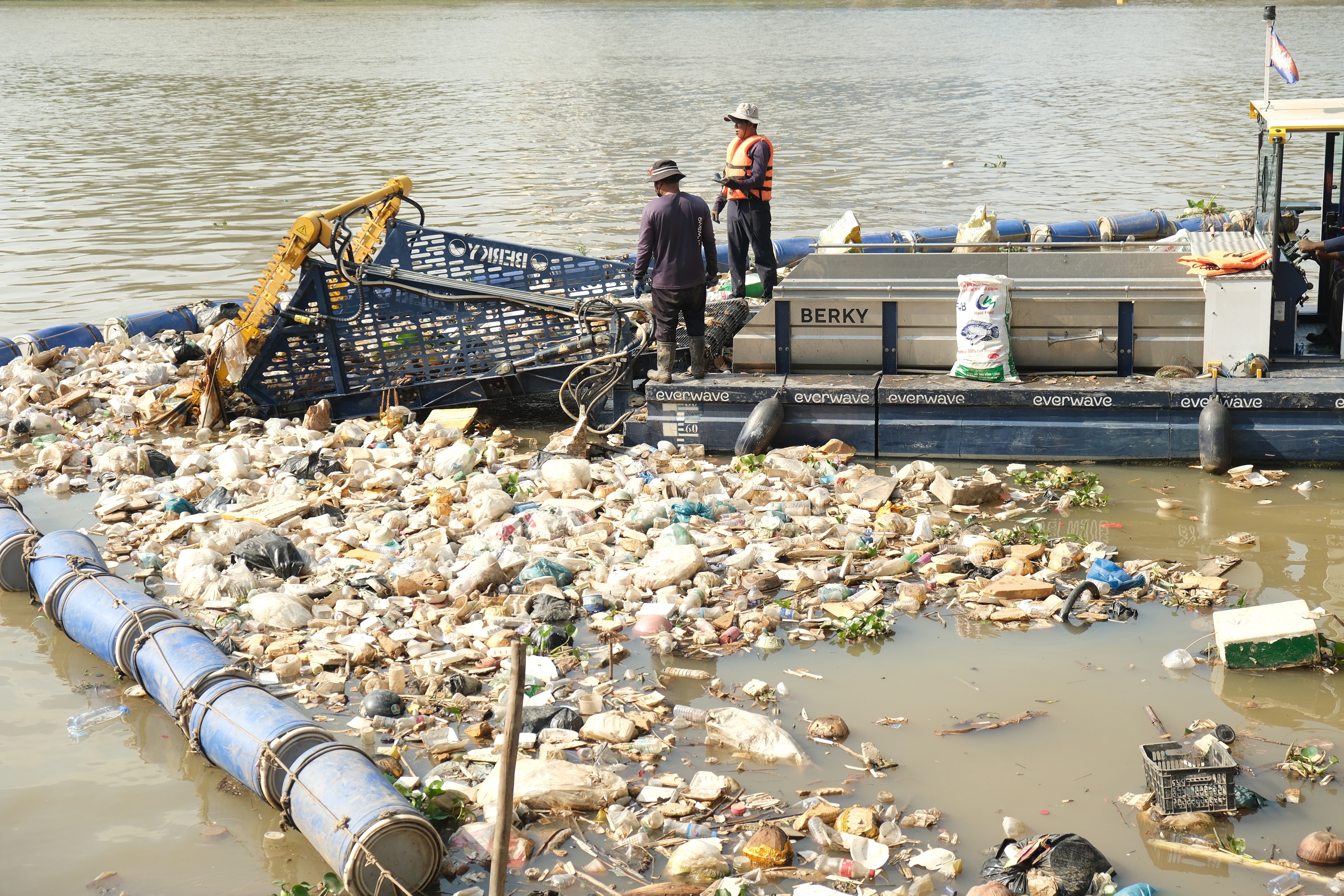
With the guiding principle ‘1 euro = 1 kilogram of waste’, the partners recovered 10,000 kilograms of waste from rivers in Cambodia at the start of the initiative.

Around 11 million tonnes of plastic waste enter the oceans every year. 

Without effective countermeasures, this volume could almost triple by 2040. Studies show that about 80 percent of marine plastic reaches the sea via roughly 1,656 rivers worldwide. To date, everwave has removed in excess of a staggering 2.4 million kilograms of plastic from rivers in Cambodia, Albania, and Thailand. 

The company uses specially-designed  waste collection boats, barriers, and manual cleanups to stop plastic before it reaches the oceans. 

At the same time, mobile sorting and recycling solutions return materials efficiently to the circular economy. AI support optimises collection routes to clean as many waterways as possible in a sustainable way.

The partnership began in Cambodia, where the initiative’s waste collection boats operate in rivers and canals around cities.

 With this action, PLAN-B NET ZERO and everwave advance their shared vision of a clean and sustainable future.

“Together with everwave, we have already removed 10,000 kilograms of waste from rivers in Cambodia. We want to use our good energy in the best possible way, because clean energy alone does not help without a clean planet,” Julia Schnitger, Head of Marketing at PLAN-B NET ZERO, proudly told That's Green.

everwave carries out cleanups directly on site and works closely with local authorities and partners. This structure anchors the measures long term in the regions and creates measurable impact.

PLAN-B NET ZERO transforms 100% sustainable energy from a commodity into a lifestyle product. 

Their platform expands energy supply with digital and service-based offerings, as well as software and licensing. 

Data-driven optimisation, user-focused features, and additional services beyond pure energy supply create a new, integrated user experience.

You can learn more by visiting

www.planbnetzero.com 

and 

https://everwave.de/en

Monday, 9 January 2012

Environmental Award Nomination for 'Flawless' Oil Recovery Operation by Crown Oil

Crown Oil has been nominated for an environmental award following a successful operation to remove and recycle 6.4 million litres of gas oil at Derwent Power Station. The nomination in the Environmental Contribution to Industry category at HazardEx magazine recognises that Crown Oil’s environmental services division completed the complex operation, requiring over 200 tanker movements, without spilling a single drop of oil.

Crown Oil is one of only a few UK companies with the technical resources to undertake this scale of oil recovery. The company carefully analyse and assess fuel recovered from industry and re-blend if necessary before it is sold on to the market. The scope of work includes not just oil recovery, but the complete cleaning and degassing of tanks. These may be left in-situ for future use or removed from site.

The Derwent contract was just one of several undertaken by Crown Oil UK. The company successfully completed a similar project to recover 25 million litres of fuel at Medway Power Station in Kent in 2010 and are in active negotiations for further work.

“Following changes to the interruptible gas tariff, many power stations and industrial users face a dilemma. Large stocks of reserve gas oil, that is no longer needed, will only deteriorate with time to potentially become an environmental hazard.” explained Crown Oil’s general manager Mark Andrews. “We can help them with safe waste oil removal and the decommissioning of tanks, overcoming environmental problems and also releasing working capital.”

Crown Oil takes its environmental responsibilities seriously. The company fuel delivery tanker fleet is carbon offset so that all fuel delivery mileage is carbon free. For off road use, the company offer red diesel users an option to use a totally carbon offset fuel. To enable combined heat and power (CHP) plant operators to collect maximum renewable obligation certificates (ROC’s) Crown Oil have a high grade bio-fuel made from 100 per cent sustainable sources. This enables users to trade these certificates or use them to offset against their other carbon producing activity.

HazardEx is the leading journal covering industries such as oil and gas, exploration, production and processing where explosive hazards may be present. Award winners will be revealed at a gala dinner in Harrogate on February 29.

Tuesday, 14 June 2011

On the side of the Angels: Angel Springs launch own range of eco boilers

It’s very important to keep hydrated as this helps us to stay healthy and energised, and now Angel Springs have developed a new range of eco boilers meaning you can meet your hot water needs in a greener, more environmentally friendly way.

Angel Springs is one of the top water cooler service providers in the UK (you'll probably have seen their vans out on the roads) and their innovative products and systems are leading the way in terms of work place and domestic hydration solutions. The new eco boiler range by Angel is the latest example of this and saves customers both time and money. A reduction in the energy used by this eco boiler will lower business costs and household bills, resulting in a cost effective way to preparing hot drinks.

These instant water boilers are suitable for all needs and they are available in a stylish stainless steel finish – providing a sleek look to any kitchen or workplace. Available in 5 or 10 litre variations the eco boiler is plumbed into the mains water supply which has an automatic refill facility – meaning that once it’s up and running you don’t have to worry about replacement bottles or refills.

The new range of eco boiler also incorporates the latest BRITA filtration technology providing a high quality tasting drink free from harmful impurities. So they are better for you, too. And what's more, each eco boiler is made from 98% recyclable materials and comes in a range of different sizes depending on your needs.

To find out more about the new eco boiler visit www.angelsprings.com or call 0845 370 1177.